
Can Anxiety Cause Hair Loss? Symptoms and Treatment
We all occasionally feel anxious, but for different people, those feelings may be more intense and intrusive. If you experience occasional anxiety or have a diagnosis of an anxiety illness like generalized anxiety disorder (GAD), you may have wondered if your anxiety can impact your hair.
Yes, anxiety can be part of your hair loss reasons. The persistent hair loss that might result in receding hairlines or bald patches is known as male pattern baldness. Hair loss caused by worry is not the same as this condition. Instead, telogen effluvium, a kind of hair loss, is more commonly brought on by mental health problems, including anxiety or long-term stress.
Anxiety and Hair Loss Relation
Hair loss and anxiety share a complex relationship. Experiencing stress or chronic anxiety can impact the body’s hormonal balance and immune system, potentially leading to hair thinning or shedding. Anxiety hair loss is a well-documented phenomenon, where emotional and psychological stress directly influences the health of hair follicles.
Can Anxiety Cause Hair Loss?
Yes, anxiety can cause hair loss. Episodes of intense stress or prolonged anxiety may trigger hair shedding conditions such as telogen effluvium, where a higher number of hair follicles enter the resting phase and fall out. Hair loss due to anxiety can affect both men and women and may appear suddenly or gradually.
Why Does Anxiety Cause Hair Loss?
Anxiety causes hair loss by activating the body’s stress response. Elevated cortisol levels can disrupt the natural hair growth cycle, weakening hair roots and slowing new growth. Anxiety may also lead to habits like hair-pulling (trichotillomania), which further damages follicles. Additionally, prolonged stress can affect nutrient absorption, making hair more fragile and prone to shedding.
Symptoms of Hair Loss Due To Anxiety
Recognizing the symptoms of hair loss due to anxiety is important. Common signs include:
- Excessive shedding during brushing or washing hair
- Noticeable thinning around the scalp, particularly the crown or hairline
- Breakage or brittle strands
- Hair loss accompanied by other stress-related symptoms, such as sleep disturbances, fatigue, or mood changes
These symptoms indicate that hair loss is not caused by genetics alone but may be linked to underlying anxiety.
Can Hair Loss From Anxiety Be Reversed?
Hair loss from anxiety is often reversible once stress levels are managed. Reducing anxiety can allow hair follicles to re-enter the growth phase, restoring thickness and density over time. However, recovery can take several months, and patience is key. Early intervention with stress management techniques significantly improves outcomes.
How to Stop Hair Loss From Anxiety?
To address hair loss anxiety, consider the following strategies:
- Stress Management: Regular exercise, meditation, and mindfulness can reduce cortisol levels.
- Healthy Diet: A nutrient-rich diet supports hair growth and overall health.
- Adequate Sleep: Quality rest helps regulate hormones that affect hair growth.
- Medical Support: Consulting a psychologist or therapist can help manage chronic anxiety effectively.
- Topical Treatments: Minoxidil and other dermatologist-recommended products may aid in maintaining hair density.
Types of Hair Loss Due to Anxiety
When clumps of hair may be readily brushed out or pulled out and are related to stress and worry, two types of hair loss are frequently present.
Alopecia Areata.
Unexpectedly and for no apparent cause, large clumps of hair might fall out, leaving patches of baldness. Other body portions of certain people's bodies may also lose hair. Although the hair will grow back, persistent stress and worry can worsen the hair loss, resulting in baldness and various bald patches.
Telogen Effluvium.
Can A Hair Transplant Fix Hair Loss Due To Anxiety?
If anxiety-induced hair loss has led to permanent thinning in certain areas, a hair transplant may restore natural density. Procedures like FUE Hair Transplant (Follicular Unit Extraction) can address patchy hair loss, providing long-lasting results. However, it’s essential to first manage underlying anxiety to prevent further shedding and ensure the longevity of transplant outcomes.
This type of hair loss is the second most prevalent. It happens whenever there is a shift in the number of hair follicles producing hair. There will be fewer hair follicles that are actively growing hair, which will lead to an increase in dormant hair follicles and hair loss. When TE is present, the scalp's hair's top may thin more than the sides or back.
Treatments for Anxiety Hair Loss
FDA-approved, over-the-counter medications and topical products like Minoxidil and Finasteride can help to promote hair growth and treat hair loss caused by anxiety. By improving blood flow and oxygen delivery to the scalp, minoxidil or rogaine nourish the hair follicles. Finasteride, on the other hand, is a prescription drug that lessens the production of dihydrotestosterone (DHT), the hormone chiefly responsible for male pattern baldness. By lowering DHT levels, finasteride promotes hair growth.
Another effective treatment for hair loss involves massaging the scalp with specific essential oils. Examples include thyme oil, castor oil, lemongrass oil, rosemary oil, peppermint oil, castor oil, lavender oil, peppermint oil, and peppermint oil.
Your stress level needs to be handled in addition to hair loss. Stress management strategies include breathing exercises, yoga, meditation, and positive thinking. Exercise releases chemicals like endorphins, dopamine, serotonin, and norepinephrine that affect your mood and aid in stress management, while yoga and meditation quiet the mind.
Missing meals or indulging in unhealthy eating habits when under stress is typical. But to stop losing your hair, you must watch what you eat to ensure you're getting all the vital vitamins and nutrients that encourage hair development.
Eat meals high in proteins that are healthy for your hair and contain zinc, iron, and vitamins E, A, B, and K. Does vitamin D deficiency cause hair loss? Vitamin D and hair loss are closely related; both vitamin D excess and deficiency can result in hair loss. Therefore, it's essential to have a healthy intake of vitamin D.
Male pattern baldness or temporary anxiety-related hair loss can be frustrating and distressing experiences. The best part is that there are various approaches to treating hair loss and anxiety, ranging from dietary adjustments to counseling and medication. Explore your options for hair repair by visiting Asmed.
ASMED Surgical Medical Center: Advanced Hair Restoration Solutions
At ASMED Surgical Medical Center, we combine science, technology, and artistry to deliver exceptional hair restoration results. Using cutting-edge FUE digital technology, including the KE-Bot robotic scanning system and K.E.E.P. embedding placer, Dr. Koray Erdogan and his team provide precise scalp analysis and optimal graft placement. With real-time surgical adjustments and a patient-focused approach, ASMED ensures natural, uniform, and long-lasting hair restoration outcomes. You can consider getting a hair transplant in Turkey at ASMED. Our mission is to guide patients through safe, innovative procedures while supporting their confidence and well-being throughout the hair restoration journey.
Get a Free Consultation!
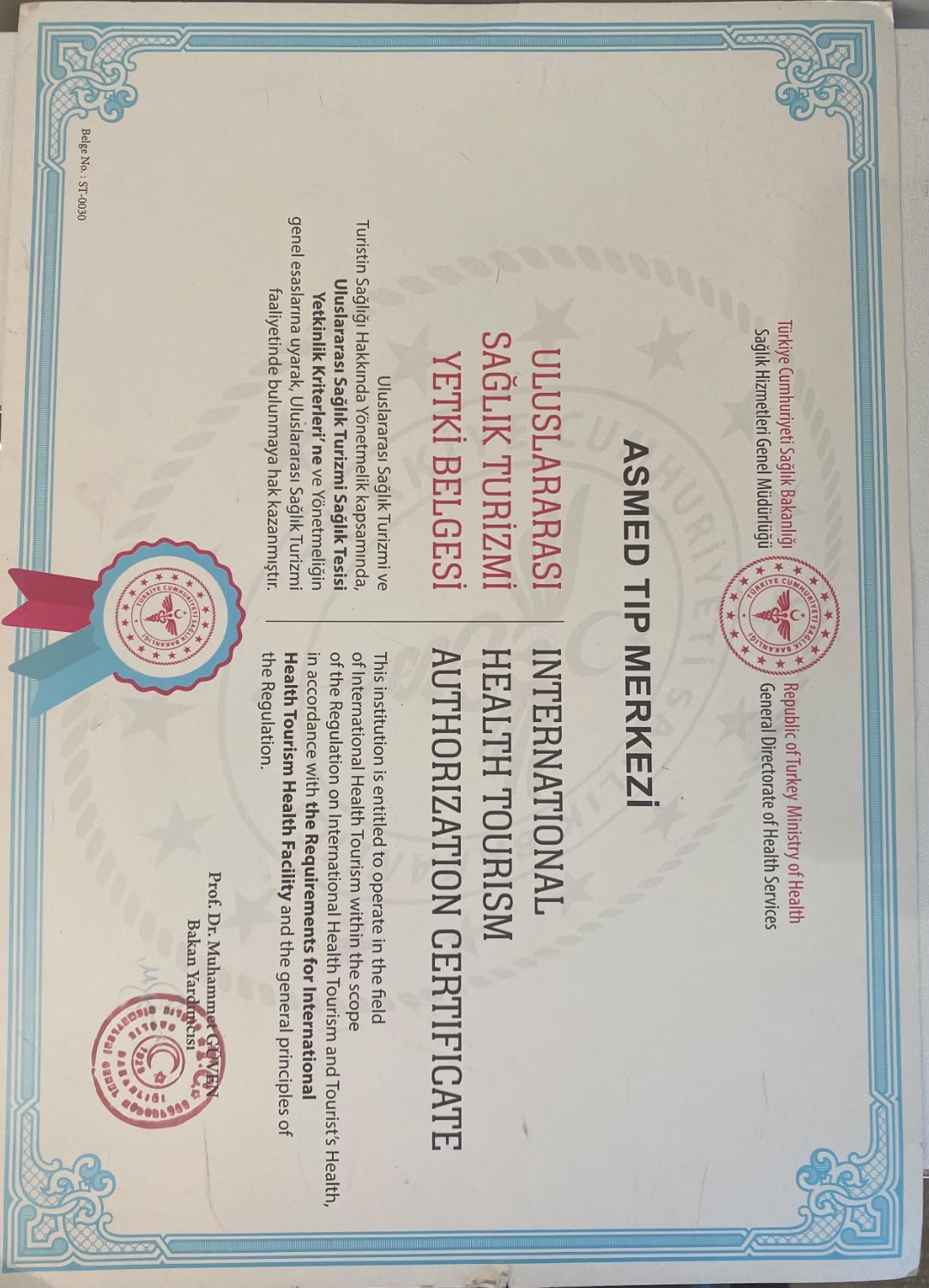
Uluslararası Sağlık Turizmi Yetkili Sağlık Tesisi
ASMED Tıp Merkezi, T.C. Sağlık Bakanlığı tarafından uluslararası sağlık turizmi alanında hizmet sunmak üzere yetkilendirilmiş bir sağlık tesisidir.
Sağlık Tesisi Sahibi: ASMED ÖZEL SAÇ EKİMİ SAĞLIK HİZMETLERİ A.Ş.
Yetki Belgesi No: ST-0030
International Health Tourism Authorized Healthcare Facility
ASMED Medical Center is a healthcare facility authorized by the Republic of Türkiye Ministry of Health to provide services in the field of international health tourism.
Owner and Operator: ASMED ÖZEL SAÇ EKİMİ SAĞLIK HİZMETLERİ A.Ş.
Authorization Certificate No.: ST-0030

Atatürk Mah. Sedef Caddesi No: 1/1 Ataşehir - İstanbul
Cookie Declaration - Update Date: 09.09.2026 - Editor: Ozer Erik - Tel: +90 216 464 11 11