
Best Hair Transplant Method in 2026
The best hair transplant method for you starts with understanding your hair loss, donor hair and goals. FUE and FUT describe how donor grafts are obtained. Terms such as Sapphire FUE and DHI describe tools or steps used elsewhere in the procedure. Understanding these differences makes it easier to compare treatment proposals and ask useful questions during a consultation.
Hair transplant methods: what the names mean
FUT hair transplant
In strip FUT, a strip of hair-bearing scalp is removed from the donor area and divided into follicular-unit grafts. The donor wound is closed with stitches and leaves a linear scar. The grafts are then placed in the areas selected for restoration.
FUE hair transplant
FUE (Follicular Unit Extraction) uses small punches to obtain individual follicular-unit grafts from the donor area. The grafts are then placed in recipient sites. FUE avoids a strip incision but creates small extraction wounds that heal with tiny scars. The location and distribution of extraction need careful planning.
Manual FUE, motorized FUE and robotic assistance describe ways of operating the extraction instruments. The choice of instrument is one part of a plan that also includes donor assessment, hairline design and graft placement.
Sapphire FUE
Sapphire FUE refers to using sapphire blades to create recipient sites during an FUE procedure. The sapphire blade is used at the incision stage; the grafts are still obtained through FUE. The blade material alone does not establish which treatment will give you the best result.
DHI
DHI, or Direct Hair Implantation, is a term used for implantation with a specialized device, often a sharp implanter that creates the recipient opening and places the graft in one step. FUE can be used to obtain the grafts before this placement stage. Comparing DHI and FUE therefore requires understanding both extraction and implantation.
Which method leaves no scars?
Hair transplantation involves incisions, and both FUE and strip FUT leave scars. The main difference is their pattern: small scattered scars after FUE and a linear donor scar after strip FUT. DHI and sapphire instruments do not make a transplant scar-free. Discuss donor appearance and your preferred hair length during your assessment.
Factors to consider when choosing a hair transplant technique
A useful treatment proposal should address:
- Your pattern of hair loss and the areas you want to restore.
- The amount and characteristics of the available donor hair.
- The proposed hairline, coverage and graft distribution.
- The donor hair that may be needed for future treatment.
- The planned procedure, aftercare and follow-up.
- The total cost and what your individual quotation includes.
Ask to see documented results from patients with a comparable starting point. Your consultation should explain how the plan relates to your own hair and expectations.
Manual FUE and donor planning at ASMED
At ASMED, Dr. Koray Erdoğan’s planning connects hairline design and coverage with the appearance and future capacity of the donor area. The donor regions are assessed separately, and the amount and distribution of extraction are planned around the individual patient.
ASMED uses Manual FUE with its sequential (DES) extraction technique and hand-operated punches, adapting punch size and working depth to the hair characteristics. Dr. Koray Erdoğan personally creates the recipient sites, planning the angle, direction and distribution of the transplanted hair.
For suitable patients, Long Hair FUE allows grafts to be extracted and implanted with their existing hair length retained. The assessment determines whether this option is appropriate for the patient and the proposed treatment.
FAQs about hair transplant methods
What is the most effective hair transplant method?
The appropriate method depends on your donor hair, treatment needs and the surgical plan. A technique name by itself cannot establish the coverage or appearance that can be achieved for you.
Does newer equipment mean a better result?
Equipment should be considered alongside the assessment, surgical planning and experience behind its use. Ask how a proposed instrument or technique helps address your particular needs.
How can I find out which method is suitable for me?
ASMED’s team can help you understand the proposed approach and the next steps in your assessment. Complete the online consultation form with your photos, medical history and treatment goals to begin.
Get a Free Consultation!
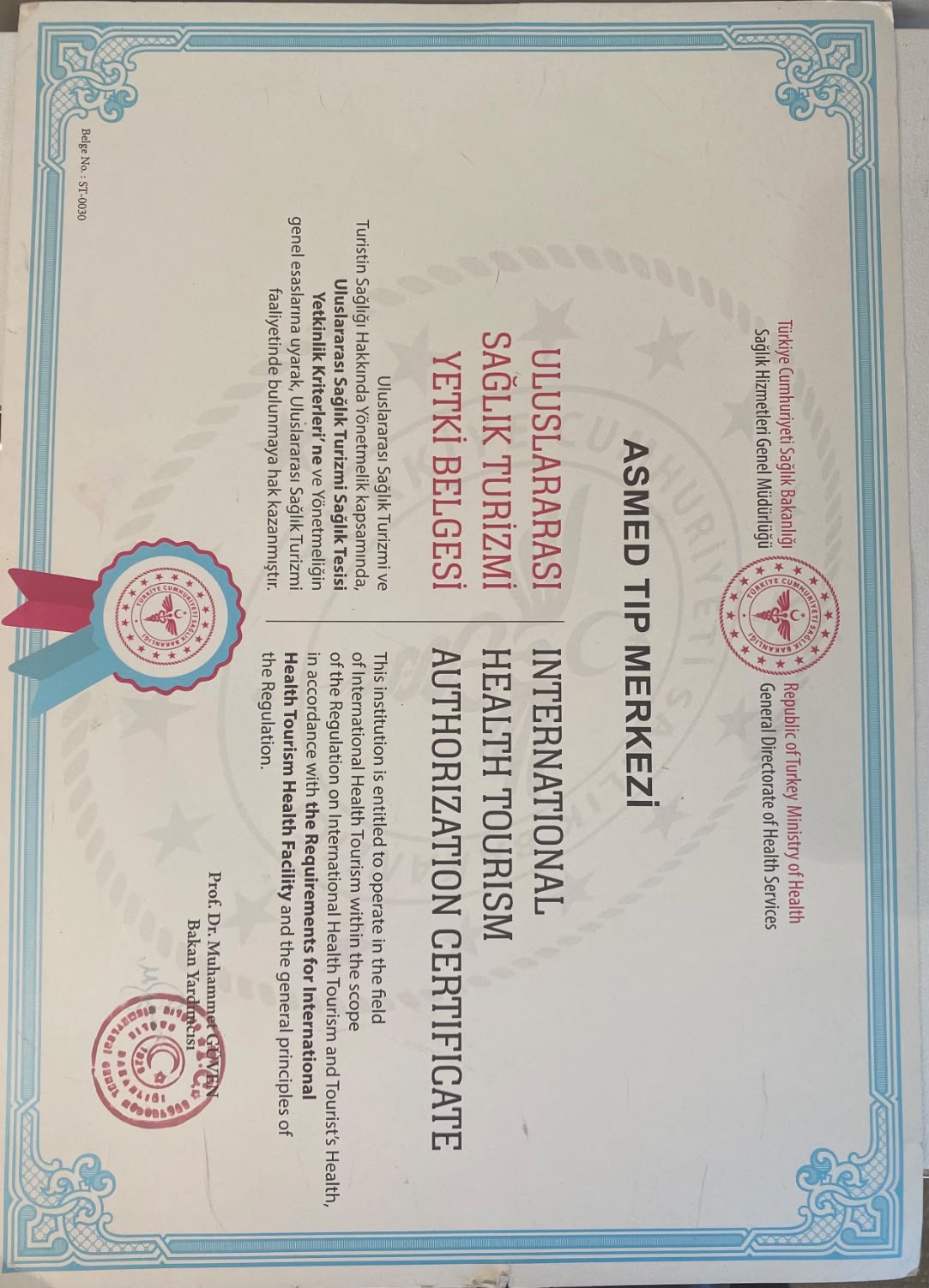
Uluslararası Sağlık Turizmi Yetkili Sağlık Tesisi
ASMED Tıp Merkezi, T.C. Sağlık Bakanlığı tarafından uluslararası sağlık turizmi alanında hizmet sunmak üzere yetkilendirilmiş bir sağlık tesisidir.
Sağlık Tesisi Sahibi: ASMED ÖZEL SAÇ EKİMİ SAĞLIK HİZMETLERİ TİCARET A.Ş.
Yetki Belgesi No: ST-0030
International Health Tourism Authorized Healthcare Facility
ASMED Medical Center is a healthcare facility authorized by the Republic of Türkiye Ministry of Health to provide services in the field of international health tourism.
Owner and Operator: ASMED ÖZEL SAÇ EKİMİ SAĞLIK HİZMETLERİ TİCARET A.Ş.
Authorization Certificate No.: ST-0030

Atatürk Mah. Sedef Caddesi No: 1/1 Ataşehir - İstanbul
Cookie Declaration - Update Date: 11.11.2026 - Editor: Ozer Erik - Tel: +90 216 464 11 11