
Hair Transplant Scar: Is It Permanent? Can It Be Repaired?
FUE and FUT leave distinctly different donor scars. FUT removes a strip of scalp and closes the area with sutures, leaving a linear surgical scar. FUE collects grafts individually, without this linear incision or sutures, and does not create the linear scar associated with FUT.
When planned around donor capacity and performed carefully, FUE preserves a natural, even donor appearance after uncomplicated healing. Balanced extraction, the density of the remaining hair and the intended hair length are central to this plan.
What Do FUE and FUT Scars Look Like?
With FUE (follicular unit extraction), grafts are collected individually using a small punch. The extraction sites can leave tiny, punctate scars that are often difficult to notice among the remaining hair. Their visibility depends on the extraction technique, individual healing and hair length.
FUT (Follicular Unit Transplantation) removes a strip of hair-bearing scalp, which is divided into grafts. Closing the donor wound leaves a linear surgical scar. Its width and visibility can vary, and longer surrounding hair can help cover it.
Both methods also involve small recipient sites for the transplanted grafts. Healing in this area can affect the skin's texture. Persistent raised areas, indentations or inflammation should be assessed by the clinic.
Why Does Donor Planning Matter?
Donor planning determines how much hair to collect from each region while preserving an even appearance. Removing too much hair or concentrating extraction in one area can leave the donor region visibly thin and patchy. Our donor area guide explains why the appearance of the remaining hair and the reserve for future treatment matter.
Are Hair Transplant Scars Permanent?
The linear surgical scar from FUT is permanent, although it can fade and be covered by the surrounding hair. FUE does not create this linear scar. After healing, the visibility of the extraction sites is assessed together with the density and length of the remaining hair.
Skin healing and transplanted hair growth are separate processes. Early redness or crusting does not show the final appearance of the treated area. The overall hair transplant result is generally assessed over 12–18 months, with individual variation.
Before the procedure, tell your surgeon if a previous operation or injury left a scar that became noticeably raised above the surrounding skin or thickened as it healed. This helps assess your healing history. Discuss your preferred hair length during planning as well.
Can Hair Transplant Scars Be Treated?
Treatment distinguishes a linear FUT scar from changes in donor appearance after FUE. In suitable patients, a FUT scar can be narrowed surgically or camouflaged by placing grafts collected with FUE into the scar. If the donor area looks uneven after FUE, the clinician first assesses whether visible extraction marks, thinning or both are responsible before planning treatment.
Hair transplantation into scar tissue can improve coverage in selected patients with a healed, suitable scar. The coverage achievable depends on the condition of the scar and the available donor hair; the surgeon assesses both when planning treatment.
Scalp micropigmentation uses pigment to camouflage the contrast of a scar; it does not grow hair or remove scar tissue. Laser treatment may improve selected scars, but the American Academy of Dermatology explains that it cannot erase a scar. The appropriate treatment and timing depend on the type of scar, your skin and your goals.
How Can You Support Healing?
Follow the wound-care and activity instructions provided for your operation. Avoid scratching or picking the treated area, and check with the clinic before adding scar products or other treatments.
If a treated area becomes increasingly painful, hot, swollen or starts to discharge, contact the clinic promptly. A possible wound problem should be assessed before considering its later cosmetic appearance.
ASMED’s Approach to Donor Appearance
At ASMED, Dr. Koray Erdoğan’s approach to hair restoration brings together clinical assessment, mathematical measurements and hairline design. Our planning considers natural-looking coverage together with the appearance and future capacity of the donor area.
AI-assisted robotic scalp analysis and Coverage Value calculations inform an individual treatment plan. The KE-BOT robotic scanning system supports these measurements on a shaved scalp. The measurements help shape an extraction plan that preserves the density and natural appearance of the donor hair while taking account of the reserve needed for possible future procedures.
With Manual FUE, grafts are collected individually using hand-operated punches. Dr. Koray Erdoğan personally creates the recipient sites, planning their direction and distribution. Grafts are placed individually using K.E.E.P. (Koray Erdoğan Embedding Placer), developed by Dr. Erdoğan for precise and controlled placement. ASMED does not use implanter pens during implantation.
Explore ASMED’s before-and-after results and request an online consultation to discuss your hair loss, any previous surgery and the appearance you want to achieve.
Get a Free Consultation!
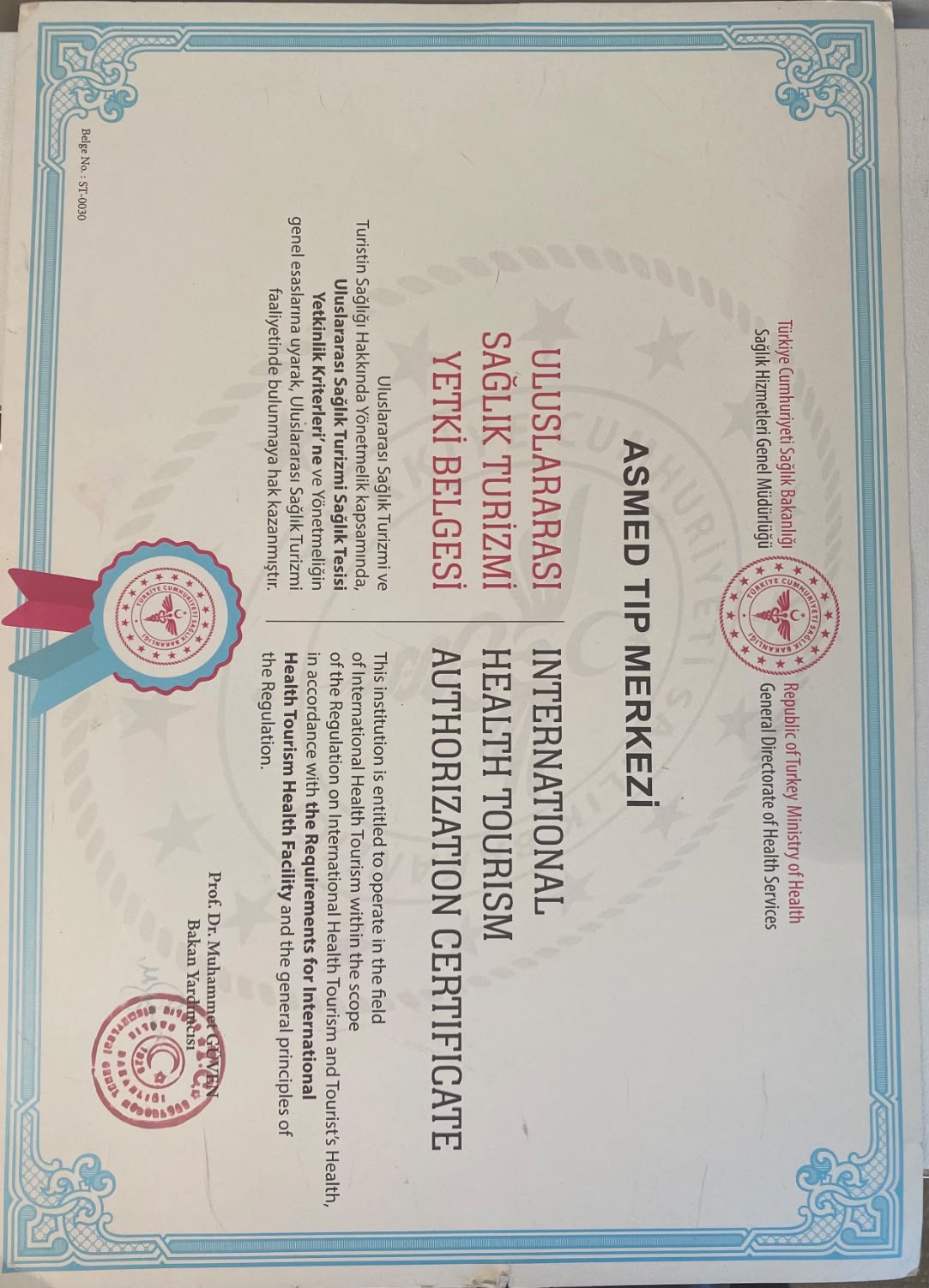
Uluslararası Sağlık Turizmi Yetkili Sağlık Tesisi
ASMED Tıp Merkezi, T.C. Sağlık Bakanlığı tarafından uluslararası sağlık turizmi alanında hizmet sunmak üzere yetkilendirilmiş bir sağlık tesisidir.
Sağlık Tesisi Sahibi: ASMED ÖZEL SAÇ EKİMİ SAĞLIK HİZMETLERİ TİCARET A.Ş.
Yetki Belgesi No: ST-0030
International Health Tourism Authorized Healthcare Facility
ASMED Medical Center is a healthcare facility authorized by the Republic of Türkiye Ministry of Health to provide services in the field of international health tourism.
Owner and Operator: ASMED ÖZEL SAÇ EKİMİ SAĞLIK HİZMETLERİ TİCARET A.Ş.
Authorization Certificate No.: ST-0030

Atatürk Mah. Sedef Caddesi No: 1/1 Ataşehir - İstanbul
Cookie Declaration - Update Date: 11.11.2026 - Editor: Ozer Erik - Tel: +90 216 464 11 11