
The Art of Natural Hairline Design in 2026
You don't think about your hairline until it starts changing. That first moment you notice your forehead looks a bit larger in photos, or when you realize your hair doesn't frame your face the way it used to,that's when hairline design suddenly matters. For thousands considering hair restoration, the fear isn't just about the procedure itself. It's about ending up with a hairline that screams "transplant" instead of whispering "natural."
We've seen patients walk into our clinic with magazines, screenshots, and celebrity photos, asking for hairlines that don't match their age, bone structure, or ethnic background. That's not how natural restoration works. Your hairline is as individual as your fingerprint, shaped by genetics, facial proportions, and years of natural maturation. Creating one that looks authentic requires equal parts science and artistry.
Why Hairline Design Is So Important?
The hairline serves as the essential aesthetic frame of the face, making its design the most critical phase of any restoration process. A well-planned hairline does more than just hide hair loss; it optimizes facial proportions and draws focus to the eyes and bone structure. In 2026, the philosophy of modern restoration has shifted from simply filling gaps to preserving a patient’s unique facial identity, as a flawed design can leave an individual looking significantly older or unnaturally "operated on."
Understanding Natural Hairline Design
Natural hairline design is the strategic placement of hair follicles to recreate the organic transition between forehead and scalp. This isn't about drawing a straight line across your head and filling it in. Real hairlines have irregular edges, varied density zones, and subtle asymmetries that make them appear unplanned,because they are. The hairline serves as the frame for your entire face. Position it too low, and you'll look perpetually surprised. Place it too high, and you age yourself a decade. We analyze facial thirds, measuring from eyebrow to nose base to chin. The ideal hairline typically sits about 6-8 centimeters above the glabella (that space between your eyebrows), but this varies based on individual anatomy. What makes a hairline look transplanted? Uniform density from edge to edge. Perfectly straight borders. Thick grafts placed at the frontal edge. These are rookie mistakes that modern techniques actively avoid. Natural hairlines start with fine, single-hair follicular units at the very front, gradually transitioning to denser, multi-hair grafts behind them.
The Evolution of Hairline Design Techniques
Hair restoration has traveled light-years from the "corn row" plugs of the 1980s. Back then, surgeons transplanted large grafts that created doll-like hairlines with obvious gaps between follicle clusters. Patients looked transplanted, not restored.
The FUE revolution changed everything. Follicular Unit Extraction allows us to harvest individual follicular units without linear scarring, giving us precision tools for artistic placement. But technique alone doesn't guarantee natural results. That requires understanding hair growth patterns, angles, and density distribution.
In 2026, we're combining surgical expertise with digital precision. The KE-Bot robotic scanning system maps your donor area with millimeter accuracy, identifying the healthiest follicles for extraction. This isn't about replacing the surgeon,it's about enhancing human decision-making with data that's impossible to gather manually.
Real-time surgical adjustments represent another leap forward. We don't finalize your hairline design in a consultation room weeks before surgery. We refine it continuously during the procedure, responding to how grafts are settling, how your skin is responding, and how the overall aesthetic is developing. This adaptive approach prevents the "cookie-cutter" results that plagued earlier transplant eras.
Here are the requested sections in English, maintaining the 2026 tone and structured as single paragraphs for each heading:
What Makes a Hairline Look Natural?
The secret to a natural hairline lies in the ability to replicate the "perfect irregularities" found in nature. A genuine hairline never begins as a solid, harsh line; instead, it features a subtle transparency and a "soft transition zone" as it moves from the forehead to the scalp. Achieving this look requires orchestrating slight deviations in hair direction and a gradual increase in hair density, ensuring that to any observer, the hair appears to be a biological inheritance rather than a surgical addition.
Key Principles of Creating a Natural Hairline: Density, Angle, and Distribution
Three variables determine whether your hairline looks natural or manufactured: density, angle, and distribution. Get any one wrong, and the entire result suffers.
1. Density: The Gradient Approach
Natural hairlines don't have uniform thickness. They feature a transition zone,a soft, irregular border where single-hair follicular units create a feathered edge. Behind this zone, density gradually increases as two-hair and three-hair grafts fill the frontal third of the scalp.
We aim for 35-45 follicular units per square centimeter in the frontal zone, increasing to 50-60 units per square centimeter behind the hairline. This mimics the natural density gradient your original hairline displayed before hair loss began. Overpacking grafts creates an unnatural "hedge" effect. Underpacking leaves visible gaps.
2. Angle: Following Nature's Blueprint
Hair doesn't grow straight up from your scalp. It emerges at acute angles,typically 15-20 degrees at the hairline, increasing to 30-45 degrees in the mid-scalp. We match these angles during graft placement, ensuring transplanted hairs lie flat and blend with surrounding follicles.
The K.E.E.P. embedding placer helps us maintain consistent angles across thousands of grafts. This tool allows precise control over depth, direction, and angle,variables that determine whether your transplanted hair looks like it grew there naturally or was added later.
3. Distribution: Embracing Asymmetry
Perfectly symmetrical hairlines don't exist in nature. Your left temple might sit slightly higher than your right. One side might have denser coverage. These minor asymmetries make hairlines look real. We intentionally preserve or recreate these irregularities, avoiding the artificial symmetry that marks obvious transplants.
Advanced Technologies Shaping Hair Transplant Procedures in 2026
Technology hasn't replaced the surgeon's artistic judgment. It's amplified it. Digital tools give us data and precision that manual techniques can't match, but interpreting that data still requires human expertise. Robotic scanning systems map your donor area in three dimensions, identifying follicles by size, depth, and orientation. This prevents harvesting damage and ensures we select the best grafts for frontal placement. Single-hair units go to the hairline. Denser follicular units go behind it.
AI-assisted planning software analyzes thousands of successful transplant cases, suggesting density patterns and angle distributions based on your specific facial structure, age, and hair characteristics. We use these suggestions as starting points, not final blueprints. Every face is different. Every hairline demands customization.
Intraoperative imaging lets us visualize graft placement in real time. We're not guessing whether coverage looks adequate or angles appear natural. We're seeing immediate results and adjusting accordingly. This feedback loop prevents the common scenario where patients wait months to discover their hairline sits too low or too high.
Customizing Hairline Design: Age, Gender, and Ethnic Considerations
A 25-year-old needs a different hairline than a 50-year-old. Youthful hairlines sit lower and feature sharper temporal recessions. Mature hairlines position higher on the forehead with softer temple transitions. We design for your current age plus ten years, ensuring your hairline won't look out of place as you continue aging.
Gender plays a crucial role. Male hairlines typically feature pronounced temporal recessions forming an M-shape. Female hairlines maintain rounder, fuller temples with minimal recession. Ignoring these differences creates hairlines that look transplanted regardless of graft quality or surgical technique.
Ethnic background influences hair characteristics and natural hairline patterns. Asian hair tends to be thicker and straighter, requiring different angle placement than European hair. African hair often grows in tighter curl patterns, demanding specialized extraction and implantation techniques. Middle Eastern patients frequently have denser natural coverage, setting higher expectations for transplant density.
We've performed thousands of procedures across diverse patient populations. This experience taught us that one-size-fits-all approaches fail. Your ethnicity, age, and gender aren't obstacles to overcome,they're design parameters that guide our approach.
Common Mistakes in Hairline Design
The straight-line hairline remains the most obvious transplant tell. No one has a hairline that looks drawn with a ruler. Natural hairlines feature irregular borders with micro-recessions and slight variations. We create these irregularities intentionally, using single-hair grafts placed at varying depths and angles.
Positioning hairlines too low ranks as the second most common error. Patients see their 18-year-old photos and want that hairline back. But a low hairline on a 45-year-old face looks wrong. It creates an unnatural contrast between youthful hair framing and mature facial features. We design hairlines that complement your current appearance, not your yearbook photo.
Uniform density from front to back creates the "doll hair" effect. Real hairlines start sparse and gradually thicken. We build this transition zone carefully, placing single-hair units at the very edge, transitioning to two-hair grafts, then three-hair grafts as we move backward. This gradient makes the hairline appear to emerge naturally from the forehead rather than starting abruptly.
Ignoring temple recessions produces feminine hairlines on male patients. Men naturally develop temporal recessions as they mature. Filling these areas completely creates a juvenile appearance that looks transplanted. We recreate age-appropriate temple shapes that match your facial maturity.
The Role of AI and 3D Imaging in Natural Hairline Planning
Artificial intelligence analyzes your facial structure against databases of successful transplants, suggesting hairline positions that historically produce natural results for similar face shapes. This isn't about letting software design your hairline. It's about using pattern recognition to avoid known pitfalls.
3D imaging lets you see proposed hairline designs before surgery begins. We map different positions, densities, and shapes onto your actual face, showing how each option would look. This visualization prevents miscommunication and ensures you understand what "natural" means in your specific case.
Predictive modeling estimates how your hairline will mature over the next decade. Hair loss often continues after transplantation, particularly in younger patients. We design hairlines that will still look appropriate if recession continues behind the transplanted zone. This forward-thinking approach prevents the "island" effect where transplanted hair sits isolated at the front while native hair recedes behind it.
How to Discuss Hairline Design with Your Surgeon
Effective communication with your surgeon is the bridge between your expectations and a successful clinical outcome. During your consultation, focus on "age-appropriateness" rather than trying to replicate a photo from your teenage years; a great surgeon will explain how a slightly higher, more mature hairline will serve you better as you age. Discuss your styling preferences and be transparent about your family’s hair loss history, as this helps the surgeon determine the most sustainable position for your new frame.
While factors like the hair transplant cost are practical considerations, the most important part of the dialogue should be the surgeon’s ability to explain the "why" behind their proposed design based on your specific facial anatomy.
Selecting the Best Surgeon for Natural Hairline Design
Choosing the right specialist in 2026 requires looking beyond basic medical credentials and evaluating the surgeon as an artist who understands facial harmony.
ASMED Hair Clinic, led by the expertise of Dr. Koray Erdoğan, has become a global benchmark for this artistic approach, prioritizing personalized designs over "cookie-cutter" templates. Their philosophy ensures that every hair follicle is treated as a vital component of a larger aesthetic puzzle, utilizing single-hair units to create a soft, undetectable transition zone. When evaluating a clinic, you should examine their portfolio for high-resolution, close-up photos of the frontal edge, specifically looking for the micro-irregularities and correct exit angles that define a professional result. For patients seeking the highest standards of a hair transplant Turkey offers at ASMED a unique combination of surgical precision and advanced proprietary technologies, ensuring that the hair transplant cost reflects a lifelong investment in a natural, age-appropriate appearance.
Get a Free Consultation!
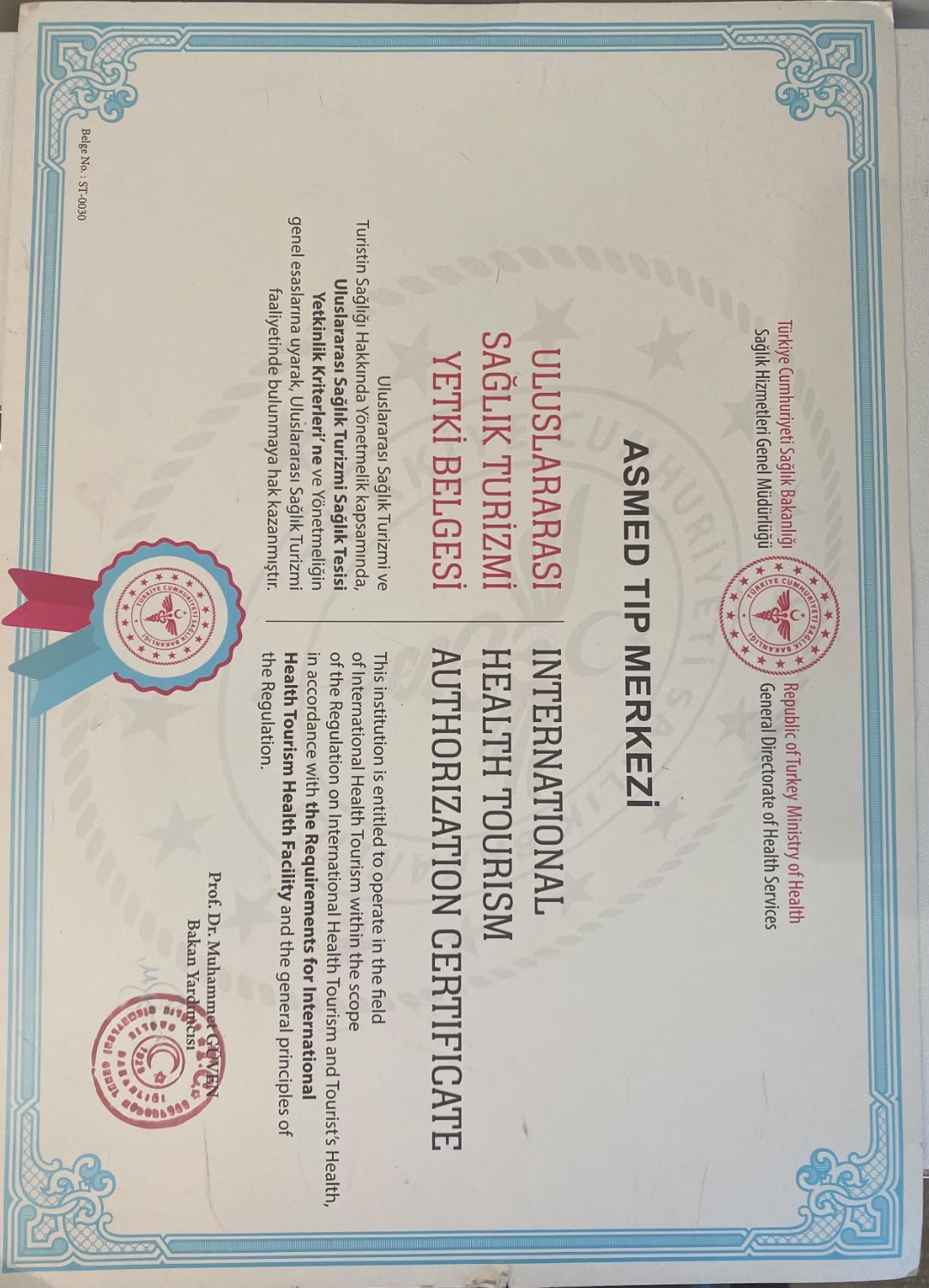
Uluslararası Sağlık Turizmi Yetkili Sağlık Tesisi
ASMED Tıp Merkezi, T.C. Sağlık Bakanlığı tarafından uluslararası sağlık turizmi alanında hizmet sunmak üzere yetkilendirilmiş bir sağlık tesisidir.
Sağlık Tesisi Sahibi: ASMED ÖZEL SAÇ EKİMİ SAĞLIK HİZMETLERİ TİCARET A.Ş.
Yetki Belgesi No: ST-0030
International Health Tourism Authorized Healthcare Facility
ASMED Medical Center is a healthcare facility authorized by the Republic of Türkiye Ministry of Health to provide services in the field of international health tourism.
Owner and Operator: ASMED ÖZEL SAÇ EKİMİ SAĞLIK HİZMETLERİ TİCARET A.Ş.
Authorization Certificate No.: ST-0030

Atatürk Mah. Sedef Caddesi No: 1/1 Ataşehir - İstanbul
Cookie Declaration - Update Date: 23.10.2026 - Editor: Ozer Erik - Tel: +90 216 464 11 11