
The Art of Natural Hairline Design in 2026
You don’t think about your hairline until it starts changing. That first moment you notice your forehead looks a little larger in photos, or your hair no longer frames your face as it used to, is when hairline design suddenly matters. For many people considering restoration, the concern is ending up with a hairline that announces a transplant instead of looking naturally their own.
Your hairline is as individual as your fingerprint, shaped by facial proportions, hair characteristics and years of natural maturation. Creating one that looks authentic requires both science and artistry.
Why Hairline Design Is So Important
The hairline serves as the essential aesthetic frame of the face, making its design the most critical phase of any restoration process. A well-planned hairline does more than just hide hair loss; it optimizes facial proportions and draws focus to the eyes and bone structure.
At ASMED, Dr. Koray Erdoğan designs the hairline around the patient’s facial proportions, existing hair and goals. The donor supply available to support that design over time is part of the same decision.
Understanding Natural Hairline Design
Natural hairline design is the strategic placement of hair follicles to recreate the organic transition between forehead and scalp. This isn't about drawing a straight line across your head and filling it in. Real hairlines have irregular edges, varied density zones, and subtle asymmetries that make them appear unplanned, because they are. The hairline serves as the frame for your entire face. Position it too low, and you'll look perpetually surprised. Place it too high, and you age yourself a decade.
We analyze facial thirds, measuring from eyebrow to nose base to chin. The ideal hairline typically sits about 6-8 centimeters above the glabella (that space between your eyebrows), but this varies based on individual anatomy. What makes a hairline look transplanted? Uniform density from edge to edge. Perfectly straight borders. Thick grafts placed at the frontal edge. These are rookie mistakes that modern techniques actively avoid. Natural hairlines start with fine, single-hair follicular units at the very front, gradually transitioning to denser, multi-hair grafts behind them.
The Evolution of Hairline Design Techniques
Hair restoration has moved a long way from the large plugs associated with older procedures. Follicular-unit grafts are placed individually into the recipient sites, allowing finer control over the transition at the front.
FUE describes the collection of individual grafts from the donor area. Natural appearance also depends on the hairline design, selection of grafts, recipient sites created at natural angles and graft placement. At ASMED, these stages are planned together so that the donor hair selected serves the intended design.
What Makes a Hairline Look Natural?
The detail is in the transition. Fine, single-hair grafts soften the front edge, while grafts with more hairs can add coverage behind it. Small variations in the border help avoid a rigid outline. The direction in which each area grows matters too. A hairline should blend with the surrounding hair and support the way you prefer to style it. Reproducing a fixed template cannot account for all those differences.
Key Principles: Density, Angle and Distribution
1. Density: The Gradient Approach
A soft leading edge is followed by a gradual increase in coverage. At ASMED, single-hair grafts are placed at the front of the hairline, with two- and three-hair grafts used farther behind where appropriate. The planned distribution depends on hair thickness, existing hair and donor capacity. A universal graft-per-square-centimeter target would overlook those differences. The aim is a natural transition with useful coverage across the area being restored.
2. Angle: Following Nature’s Blueprint
Hair emerges at different angles and directions across the scalp. Recipient sites guide how the transplanted hair will lie and how it will blend with the design. Dr. Erdoğan personally creates these sites, paying particular attention to natural growth patterns. Lateral (coronal) slits are used. K.E.E.P., the placement instrument he developed, is then used to place grafts into the pre-made sites.
3. Distribution: Preserving Individual Character
A natural hairline can include subtle asymmetry and irregularity. The plan considers the central hairline, the sides and the transition toward the temples together. Small differences should support the overall shape of the face. They are deliberate aesthetic choices within an individual plan, rather than random changes in depth or direction.
Technology and Donor Planning at ASMED
Artistic design depends on knowing what the donor area can support. ASMED combines examination with measurement of hair density and thickness across donor regions. Coverage Value helps bring these measurements into the donor assessment.
For shaved FUE, KE-BOT supports assessment through robotic scalp imaging and automated measurements. KE-Hair Analyzer supports preliminary assessment using magnified images of sampled donor areas with longer hair. A doctor interprets the images and measurements in the context of the patient’s hair and goals.
These tools inform donor planning. Dr. Erdoğan connects that information to the proposed hairline, the distribution of extraction and the appearance of the donor hair remaining after treatment.
Customizing Hairline Design: Age, Gender, and Ethnic Considerations
A 25-year-old needs a different hairline than a 50-year-old. Youthful hairlines sit lower and feature sharper temporal recessions. Mature hairlines position higher on the forehead with softer temple transitions.
Gender plays a crucial role. Male hairlines typically feature pronounced temporal recessions forming an M-shape. Female hairlines maintain rounder, fuller temples with minimal recession. Ignoring these differences creates hairlines that look transplanted regardless of graft quality or surgical technique.
Ethnic background influences hair characteristics and natural hairline patterns. Asian hair tends to be thicker and straighter, requiring different angle placement than European hair. African hair often grows in tighter curl patterns, demanding specialized extraction and implantation techniques. Middle Eastern patients frequently have denser natural coverage, setting higher expectations for transplant density.
We've performed thousands of procedures across diverse patient populations. This experience taught us that one-size-fits-all approaches fail. Your ethnicity, age, and gender aren't obstacles to overcome; they're design parameters that guide our approach.
Common Mistakes in Hairline Design
A harsh border, coarse multi-hair grafts at the leading edge or a direction that clashes with surrounding hair can make a transplant more noticeable. An overly low or broad design may also demand more donor hair than the overall plan can support.
At ASMED, the design connects the frontal frame with coverage behind it and the donor reserve. The aim is a hairline that looks at home on your face and remains part of a coherent plan over time.
How to Discuss Hairline Design with Your Surgeon
Explain what has changed, what you would like to restore and how you normally wear your hair. Share your history of hair loss, previous treatments and family pattern of hair loss.
Ask the surgeon to explain the proposed height and shape, the grafts allocated to the front and the implications for other areas. It should be clear what the first procedure is intended to achieve and what may be considered later.
Selecting a Surgeon for Natural Hairline Design
Look closely at before-and-after results. Clear views of the frontal edge and temples help show the transition, direction and distribution of hair. Compare patients with similar hair characteristics and starting points, rather than focusing on graft count alone.
ASMED brings surgical precision and artistic judgment together under Dr. Koray Erdoğan’s leadership. The aim is a personal design in which each graft contributes to the natural frame of the face while respecting the donor hair available. Complete the online consultation form to discuss your goals and begin an assessment.
Få en gratis Consultation!
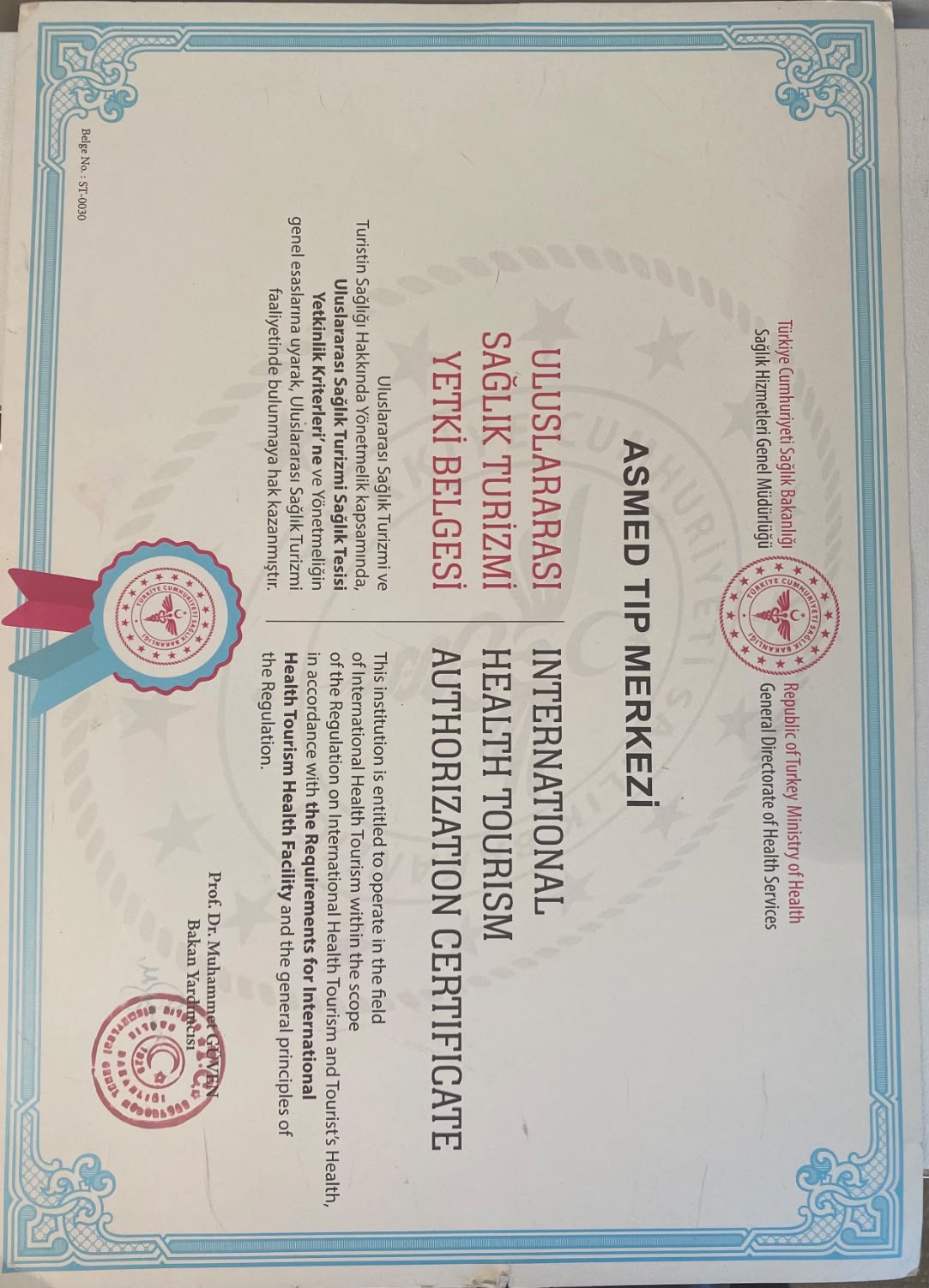
Auktoriserad vårdinrättning för internationell hälsoturism
ASMED Medical Center är en vårdinrättning som auktoriserats av Republiken Türkiyes hälsoministerium att erbjuda tjänster inom internationell hälsoturism.
Ägare och verksamhetsutövare: ASMED ÖZEL SAÇ EKİMİ SAĞLIK HİZMETLERİ TİCARET A.Ş.
Auktorisationsbevis nr: ST-0030

Atatürk Mah. Sedef Caddesi No: 1/1 Ataşehir - İstanbul
Cookie Declaration - Update Date: 11.11.2026 - Editor: Ozer Erik - Tel: +90 216 464 11 11