
How Many Hair Grafts Do I Need For FUE Hair Transplant?
A section of skin with hair is referred to as a "hair graft." To replace weaker, fewer, or dead hair follicles, healthy and strong hair grafts are taken from the donor area of a person and then transplanted to those places.
What is a Hair Graft?
A hair graft is a natural cluster of 1–4 hairs (a follicular unit). In FUE, grafts are extracted individually from the donor area (back/sides of the scalp) and implanted into thinning zones. So when you ask “how many hair grafts do I need?”, you’re really asking how many follicular units are required to meet your coverage and density goals.
How to Calculate Your Hair Graft Requirement?
There’s no one-size number for how many grafts do I need for hair transplant—it depends on:
- Area to cover (cm²): Hairline, frontal, mid-scalp, crown all differ.
- Target density: Typical aesthetic targets range ~30–45 FU/cm² (higher for hairline, lower for crown).
- Existing density: Subtract what you already have.
- Hair characteristics: Caliber (thick vs. fine), color–skin contrast, curl and grouping (avg hairs/graft).
- Donor supply & long-term planning: You must preserve reserves for future loss.
A practical approach: (Area × target FU/cm²) – (Area × existing FU/cm²), then adjust for hair caliber and styling goals. This turns the vague “how many hair grafts will I need” into a realistic range.
How Many Hair Grafts Are Needed?
The quantity of grafts required will range from individual to individual because each patient's aims for hair restoration are unique. However, it often ranges from 600 grafts (for mild hair loss) to 3,000 or more grafts (for more extensive hair loss). The Norwood-Hamilton scale or Ludwig scale can be used to determine your stage of hair loss. The more hair grafts are required to fill bald spots, the more severe the hair loss that has been discovered.
How Many FUE Grafts Do I Need?
Below are broad ranges to orient expectations. Final numbers should come from an in-person assessment and trichoscopy.
How Many Hair Grafts Do I Need For Light Hair Loss?
Receding temples or a conservative hairline refresh: 800–1,800 grafts. This suits Norwood 2–3 with good hair characteristics. Styling can further amplify the look. You can consider a 1000 grafts hair transplant at Asmed Medical for subtle yet effective density in this stage.
How Many Hair Grafts Do I Need For Moderate Hair Loss?
Frontal + mid-scalp work (common in Norwood 3–4): 1,800–3,200 grafts. If the crown is lightly addressed too, totals can reach 3,500–4,000 depending on priorities. A 3000 grafts hair transplant at Asmed Medical is a common and balanced choice for this level of loss.
How Many Hair Grafts Do I Need For Advanced Hair Loss?
Extensive recession including crown (Norwood 5–6+): 4,000–6,000+ grafts. Ultra-high plans may exceed this, but donor safeguards and balanced distribution are critical. For stronger coverage, a 5000 grafts hair transplant at Asmed Medical is often recommended. In cases aiming for maximum density and restoration, you can even consider an 8000 grafts hair transplant if donor capacity allows.
How Many Hair Grafts Needed According to Norwood Scale?
Use this as a guideline for how many hair grafts do I need (individual results vary):
- NW 2–3: ~800–1,800 grafts (temples/hairline)
- NW 3 Vertex: ~1,800–2,400 (front + early crown)
- NW 4: ~2,000–3,000 (front/mid-scalp; crown optional)
- NW 5: ~3,000–4,000 (front/mid; strategic crown)
- NW 6: ~4,000–6,000 (comprehensive rebuild, density trade-offs)
- NW 7: Often 6,000–8,000+ desired, but scalp donor limits may require multi-stage planning or adjunct beard/body hair.
These ranges help you answer “how many hair grafts do I need for hair transplant” and “how many FUE grafts do I need”, but the best number is the one that preserves donor health and still delivers natural framing and density.
How Are Hair Grafts Transplanted?
The two distinct techniques that transfer hair grafts from one location to another are follicular unit transplantation (FUT) and follicular unit extraction (FUE). A hair graft or donor follicle is removed individually from the scalp during a FUE procedure as opposed to a FUT, which involves the removal of a strip of the donor tissue (containing the hair graft or donor follicle) all at once. However, the process of implanting is the same in both procedures. The follicles are prepared for implantation by removing extra tissue from around them between removal (harvesting) and transplanting by highly trained medical technicians using powerful stereo microscopes.
Usually, the back of the patient's head serves as the donor location during a hair transplant process. The reason for this is that the DHT, a hormone that causes hair to be thin, is not able to affect the hair in certain areas (Dihydrotestosterone). In contrast to a FUT, when a strip of skin tissue is taken all at once, a hair transplant is circled, and the skin around the follicle is punctured using a tool with a diameter of about 1mm during a FUE treatment. Next, a surgical tweezer is used to remove the hair graft. 7 days after hair transplant, hair will begin to grow. A hair transplant's complete results can be observed 9 to 12 months after the procedure.
How Much Do Hair Transplant Grafts Cost?
Depending on the amount of hair that needs to be replaced and whether FUT or FUE therapy is chosen, the overall cost of a hair transplant is often determined per graft. The cost per follicular unit graft decreases as the number of follicular unit grafts increases. It also depends on how much donor hair is accessible, how each patient's hair loss is classified, and the recommended course of therapy by your doctor.
Remember that picking an experienced clinic with the appropriate technology, controlled health and safety standards, unrivaled patient experience, and top doctors can make a difference in your FUE hair transplant.
This is because the best clinics can achieve a high hair survival rate by using careful precision techniques, which results in fewer grafts being required. This is crucial because you can only use a certain amount of hair grafts from the back and sides of your scalp for transplantation during your lifetime. Therefore, it's crucial to use them well in a methodically planned operation. For the least expensive hair transplant procedure, you may as well have your hair transplant in Turkey. To address problems with your hair and hair loss, visit Asmed to learn how.
At ASMED, your graft count isn’t a guess—it’s measured. We combine hair-loss classification with digital scalp analysis and Coverage Value modeling to estimate how many hair grafts you will need precisely and sustainably. Led by Dr. Koray Erdoğan, innovations like KE-Bot robotic scanning and the K.E.E.P. embedding system enable meticulous planning and real-time adjustments for natural, homogeneous outcomes. If you’re still wondering “how many hair grafts do I need?” our team will review your photos, evaluate donor capacity, and map a plan tailored to your age, hair texture, and goals—so your FUE journey is confident, data-driven, and designed for long-term success.
Get a Free Consultation!
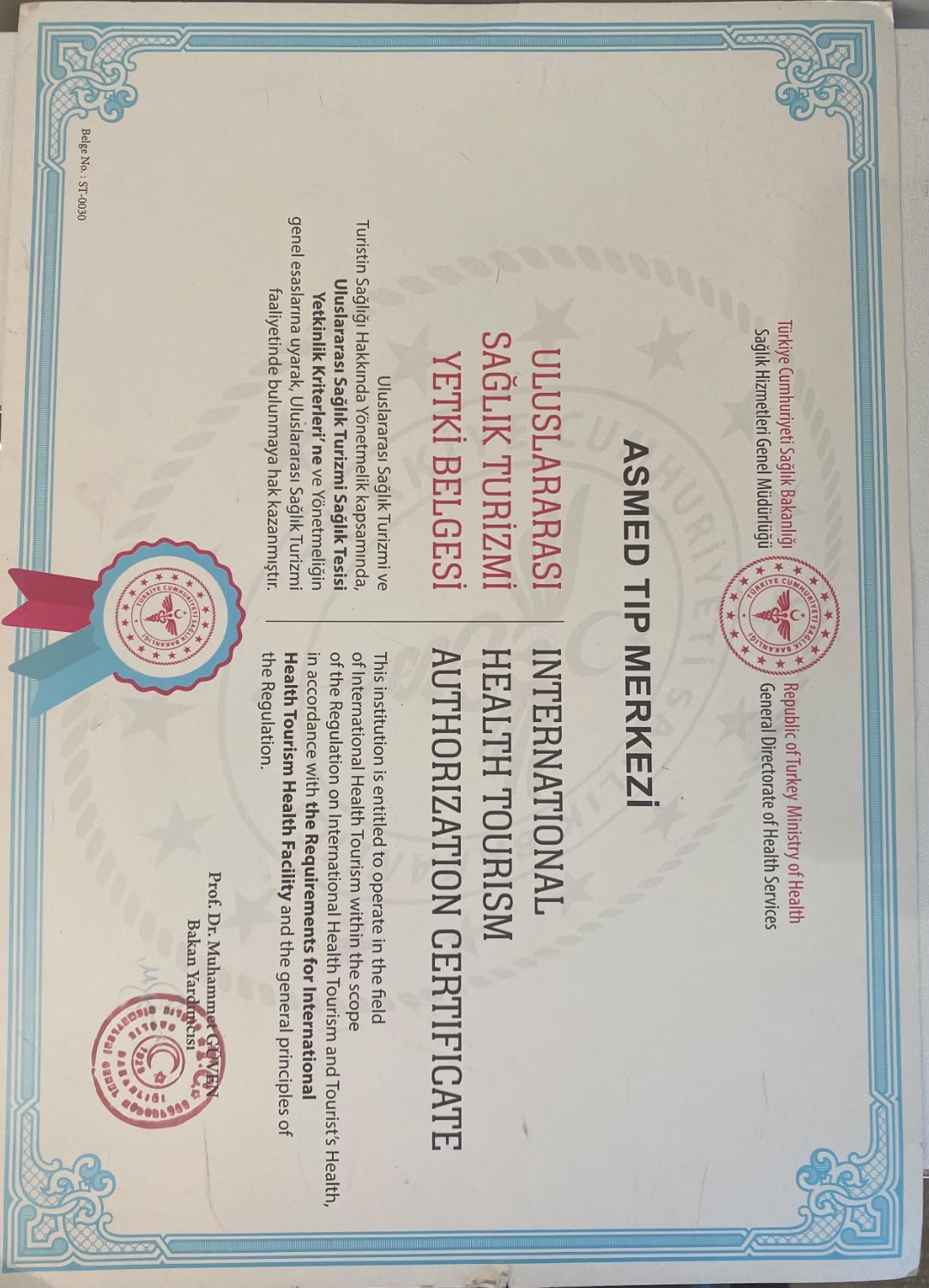
Uluslararası Sağlık Turizmi Yetkili Sağlık Tesisi
ASMED Tıp Merkezi, T.C. Sağlık Bakanlığı tarafından uluslararası sağlık turizmi alanında hizmet sunmak üzere yetkilendirilmiş bir sağlık tesisidir.
Sağlık Tesisi Sahibi: ASMED ÖZEL SAÇ EKİMİ SAĞLIK HİZMETLERİ A.Ş.
Yetki Belgesi No: ST-0030
International Health Tourism Authorized Healthcare Facility
ASMED Medical Center is a healthcare facility authorized by the Republic of Türkiye Ministry of Health to provide services in the field of international health tourism.
Owner and Operator: ASMED ÖZEL SAÇ EKİMİ SAĞLIK HİZMETLERİ A.Ş.
Authorization Certificate No.: ST-0030

Atatürk Mah. Sedef Caddesi No: 1/1 Ataşehir - İstanbul
Cookie Declaration - Update Date: 09.09.2026 - Editor: Ozer Erik - Tel: +90 216 464 11 11