
Does Brushing Hair Stimulate Growth? How to Brush?
Hair brushing is a daily habit for people that care about their hair quality and appearance.
It is a common question, does brushing your hair make it grow? It is not a main reason to create new hair follicles but the right technique can help hair to grow faster and easier and that causes hair growth.
Natural hair growth happens at a pace of 0.35 millimeters each day, or around 12 inches each month, for a total of 6 inches yearly. So even if the rate hasn't altered, your hair will grow faster the shorter it is.
Furthermore, even if a product promises to give you fuller, thicker hair, you were born with all the 80,000 to 120,000 hair follicles you'll ever have. This means you cannot develop more hair follicles (or hair strands) than what you were born with. Despite this, there are some circumstances in which you may be able to stimulate your hair follicles to aid in regrowth, which is where the following ten professional suggestions and products come in.
Your hair's rate of growth is influenced by things like
- Age
- Hair type
- General well-being
- Specific health issues
The stages of hair growth
Each strand of hair develops in accordance with the following three stages:
- Anagen. The hair goes through an active growth period of 3 to 10 years.
- Catagen. The hair stops growing during the transition phase, which lasts two to three weeks.
- Telogen. It takes 3–4 months for the hair to come out during the resting phase.
It takes two stages to promote length: stimulating growth and maintaining the health of the hair you already have. There are various ways to encourage hair development, including taking keratin supplements, using essential oils, taking vitamins, using antioxidants, wearing protective hairstyles, getting regular trims, and brushing your hair. Brushing your hair is also an important approach to encourage hair growth.
Can Brushing Your Hair Make It Grow?
Brushing the hair does not cause new hair to grow faster for sure, but it can create a place for healthy hair to grow easier than normal. By improving scalp circulation and spreading natural oils, brushing supports hair strength, reduces breakage, and helps existing hair grow to its full potential. So while brushing isn’t a growth treatment, it’s definitely a helpful habit when done correctly.
How Does Brushing Your Hair Make It Grow?
Gentle brushing stimulates blood flow to the scalp. Increased circulation means hair follicles receive more oxygen and nutrients, which are essential for healthy hair growth. Brushing also removes dirt and product buildup that can block follicles and weaken hair over time. This is why how to brush hair to stimulate growth matters more than brushing often.
Benefits of Hair Brushing
There are several proven benefits of hair brushing when done properly:
- Distributes natural scalp oils along the hair shaft
- Improves scalp circulation
- Reduces tangles and breakage
- Keeps hair looking smoother and healthier
- Helps maintain a clean scalp environment Healthy hair always starts at the scalp.
Hair Brushing Techniques for Healthy Growth
Using the right hair brushing technique is the most important part. Always choose a brush suited to your hair type. Soft bristles or wide-tooth brushes are ideal. Start brushing from the ends and slowly move upward to avoid unnecessary pulling or breakage. Never rush brushing, gentle and controlled movements are best.
How to Brush Hair to Stimulate Growth
Firstly, brush your hair gently, this is very important. Do not brush aggressively. Brush gently, not aggressively. Use slow and gentle moves from root to end. Try massaging your scalp lightly while brushing and avoid brushing while the hair is tangled.
How to Brush Wet Hair?
Brushing wet hair is easy but needs extra care. It is because wet hair is weaker than dry hair and it is easier to break and get damaged. Using a soft brusher, starting from the end and not pulling the hair will help. If possible, let hair air-dry slightly before brushing.
How to Brush Dry Hair?
Dry hair is easier to handle and brush but still needs care. So use soft brush and gentle moves while brushing and avoid over brushing to protect the hair.
How Often Should You Brush Your Hair?
So, is it good to brush your hair everyday? Yes, once or twice a day is enough. Over-brushing can damage hair rather than help it. When done the right way, brushing supports healthier, stronger hair, and that’s the real secret behind better growth.
What are the advantages of brushing your hair?
The scalp produces sebum and other natural oils that are good for hair. Every time you brush your hair, this nutrient-rich oil is dispersed from the roots to the ends by the sebaceous glands in your hair follicles. This allows moisture to pass through your hair, giving it that lovely sleekness and sheen. Additionally, the oils aid in nourishing the roots of your hair and keeping your scalp hydrated, both of which are essential for strong hair growth. The ideal brush to use is one made of wood.
Using a wooden bamboo hairbrush, you can gently massage your scalp while brushing your hair. The brush strokes can encourage blood flow, which results in more blood providing nutrients and oxygen to your scalp and stimulating your hair follicles, resulting in stronger hair follicles.
Regular brushing stimulates the scalp in addition to removing lost hair. By doing this, you reduce the possibility that these hair strands will knot, which can result in a more violent brushing that makes your hair more vulnerable to damage.
Hair transplantation should be explored since it is a long-term therapy if excessive hair loss persists despite brushing the hair to stimulate it, and it is also a crucial treatment that can stop any hair loss (balding and thinning).
Hair transplant Turkey is the finest place for hair transplantation because it has the best specialists is affordable, and uses the best techniques, including follicular unit extraction (FUE) and follicular unit transplant (FUT), to produce the best and desired results.
In an FUE hair transplant treatment, individual hair follicles are removed and transplanted to different scalp locations. In a FUT hair transplant, the scalp is removed in a long strip, the hair follicles are separated, and the hair is transplanted. Both of them are efficient and produce the desired outcome.
Hair transplant result
Patients undergoing hair transplant surgery may have some scalp discomfort for the first two to three days following the procedure. Given that the patient's scalp has undergone surgical trauma, this is completely typical. Therefore, there is no need to be concerned; it is only a surgery-related consequence. Patients who have had a hair transplant after two months may have temporary hair loss, known as shock hair loss following a hair transplant, which happens when the body heals. Existing hair loss after the hair transplant refers to the possibility that certain patients may develop hair loss in regions that were not treated during the hair transplant procedure. This is also natural since the scalp creates a defense mechanism after surgery or trauma. There is nothing to be alarmed about, as these hairs usually come back three months after hair transplant operations.
Visit the Asmed website if you require specialist guidance or counseling on healthy hair development. Asmed specialists will assist you and provide you with any information you require.
Get a Free Consultation!
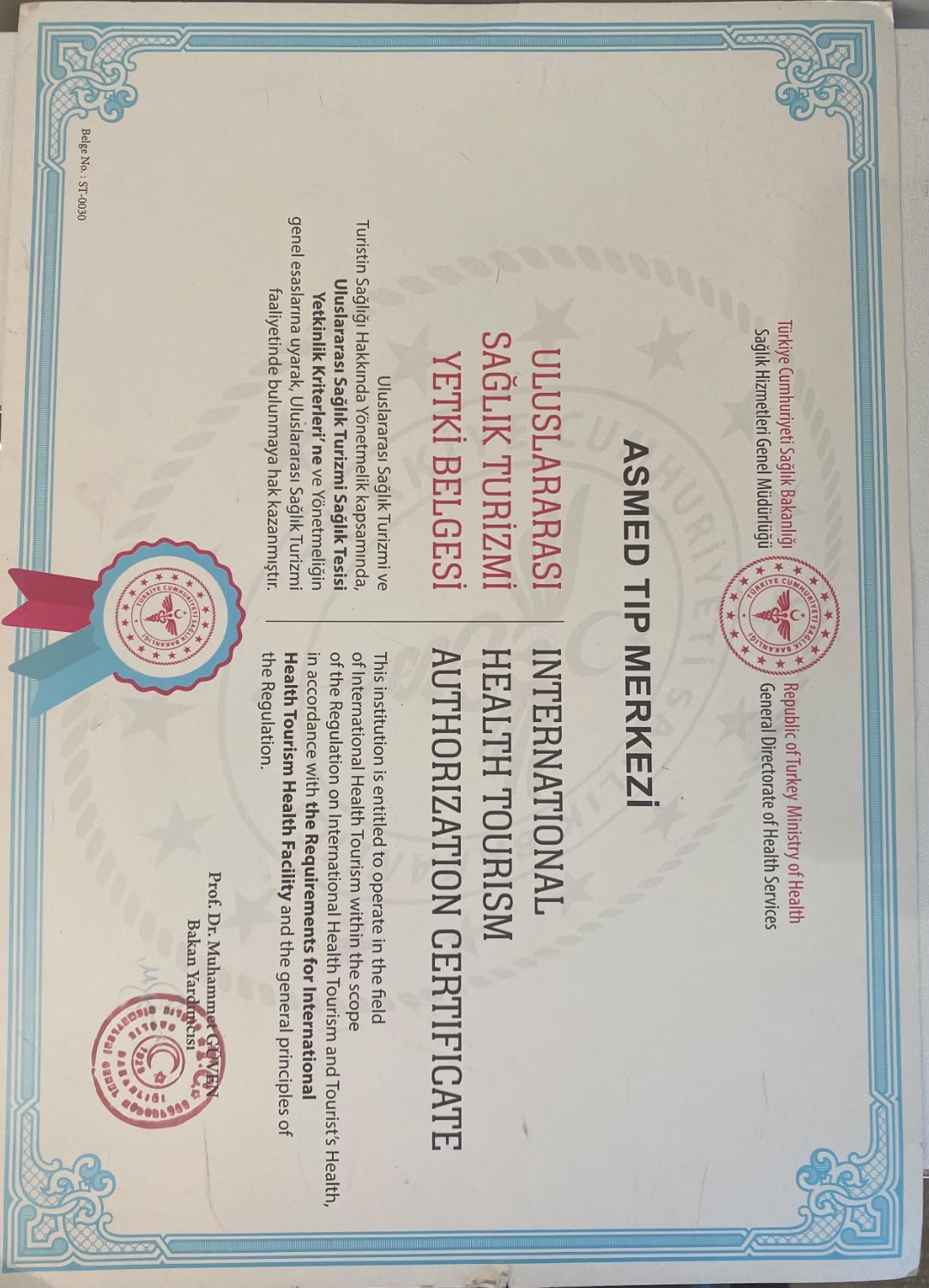
Uluslararası Sağlık Turizmi Yetkili Sağlık Tesisi
ASMED Tıp Merkezi, T.C. Sağlık Bakanlığı tarafından uluslararası sağlık turizmi alanında hizmet sunmak üzere yetkilendirilmiş bir sağlık tesisidir.
Sağlık Tesisi Sahibi: ASMED ÖZEL SAÇ EKİMİ SAĞLIK HİZMETLERİ A.Ş.
Yetki Belgesi No: ST-0030
International Health Tourism Authorized Healthcare Facility
ASMED Medical Center is a healthcare facility authorized by the Republic of Türkiye Ministry of Health to provide services in the field of international health tourism.
Owner and Operator: ASMED ÖZEL SAÇ EKİMİ SAĞLIK HİZMETLERİ A.Ş.
Authorization Certificate No.: ST-0030

Atatürk Mah. Sedef Caddesi No: 1/1 Ataşehir - İstanbul
Cookie Declaration - Update Date: 09.09.2026 - Editor: Ozer Erik - Tel: +90 216 464 11 11