
What is the Best Age for Hair Transplant?
There is no single best age for a hair transplant. The right time depends on the cause and progression of hair loss, the donor hair available and a plan that will still make sense as you grow older. An assessment can help you understand these factors before you decide on surgery.
How Does Age Affect the Best Time for a Hair Transplant?
Hair strands may become thinner and grow more slowly with age. Unlike naturally fine hair, this change may make the scalp more visible and hair look sparser. When assessing the timing of a hair transplant, the progression of hair loss is therefore considered alongside donor hair thickness and the coverage it can provide.
For suitable patients, a hair transplant aims to create a fuller appearance by moving donor hair to thinning areas. Thicker hair strands may contribute to visual coverage. Planning considers both current hair characteristics and changes that may occur with age.
Hair Transplants in Your 20s
Young adults may be advised to wait while their hair loss is assessed and treated. The future pattern can be difficult to judge early on, and using too much donor hair for a low hairline may restrict the options available if thinning continues.
An assessment in your 20s considers donor hair thickness, the progression of hair loss and the reserve that may be needed in the future. Having thicker hair strands now may be helpful for coverage, but it is not enough on its own to justify early surgery. The American Academy of Dermatology notes that some younger patients may be advised to have medical treatment and monitoring before a hair transplant.
Hair Transplants in Your 30s and 40s
In your 30s and 40s, the progression of hair loss, hair thickness and the condition of the donor area are assessed together. Transferring suitable donor hair to thinning areas may help improve coverage. The timing of the procedure is determined individually, based on current hair characteristics and a long-term plan.
Hair loss does not reliably stop at 40. A plan should account for the possibility of further thinning even when the present pattern appears relatively settled.
Hair Transplants Later in Life
Adults in later life can be considered for a transplant if their health, scalp and donor hair support the proposed procedure. Assessment includes medical conditions, medicines and any factors that could affect surgery or healing.
The goal should fit your facial features, existing hair and preferred appearance. A focused improvement in the hairline or another priority area may be more appropriate than trying to cover every area with the same density.
Is the Best Age Different for Men and Women?
There is no age that guarantees a good result for either men or women. Establishing the cause of hair loss is essential. In women, thinning may also affect potential donor regions, so visible hair loss alone does not show that transplantation is suitable.
Our guide to hair transplant candidacy explains how donor supply, scalp health and realistic expectations are assessed together.
What About Hair Loss in Children or Teenagers?
Hair loss in a child or teenager needs a medical diagnosis. An illness, injury or bald patch does not automatically mean a hair transplant is needed. Treatment depends on the cause, and any surgical question requires specialist assessment appropriate to the young person's circumstances.
Choosing the Right Time with ASMED
At ASMED Surgical Medical Center, we’re dedicated to helping you look and feel your best. We combine science, artistry and precision with an individual assessment of your hair loss and the coverage your donor hair can support.
Donor regions are assessed separately, with attention to the amount and distribution of extraction, the appearance of the remaining hair and capacity for possible future treatment. Hairline design is considered within that longer-term plan.
ASMED’s KE-BOT robotic scanning system supports donor assessment and individual planning. For implantation, ASMED uses K.E.E.P. (Koray Erdoğan Embedding Placer), developed by Dr. Koray Erdoğan, to place grafts into pre-created recipient sites.
Our patients' health, comfort and understanding of the procedure remain central to care. Complete the online consultation form with the requested photographs and background information to start discussing whether a transplant is appropriate for you and when it could be considered.
Get a Free Consultation!
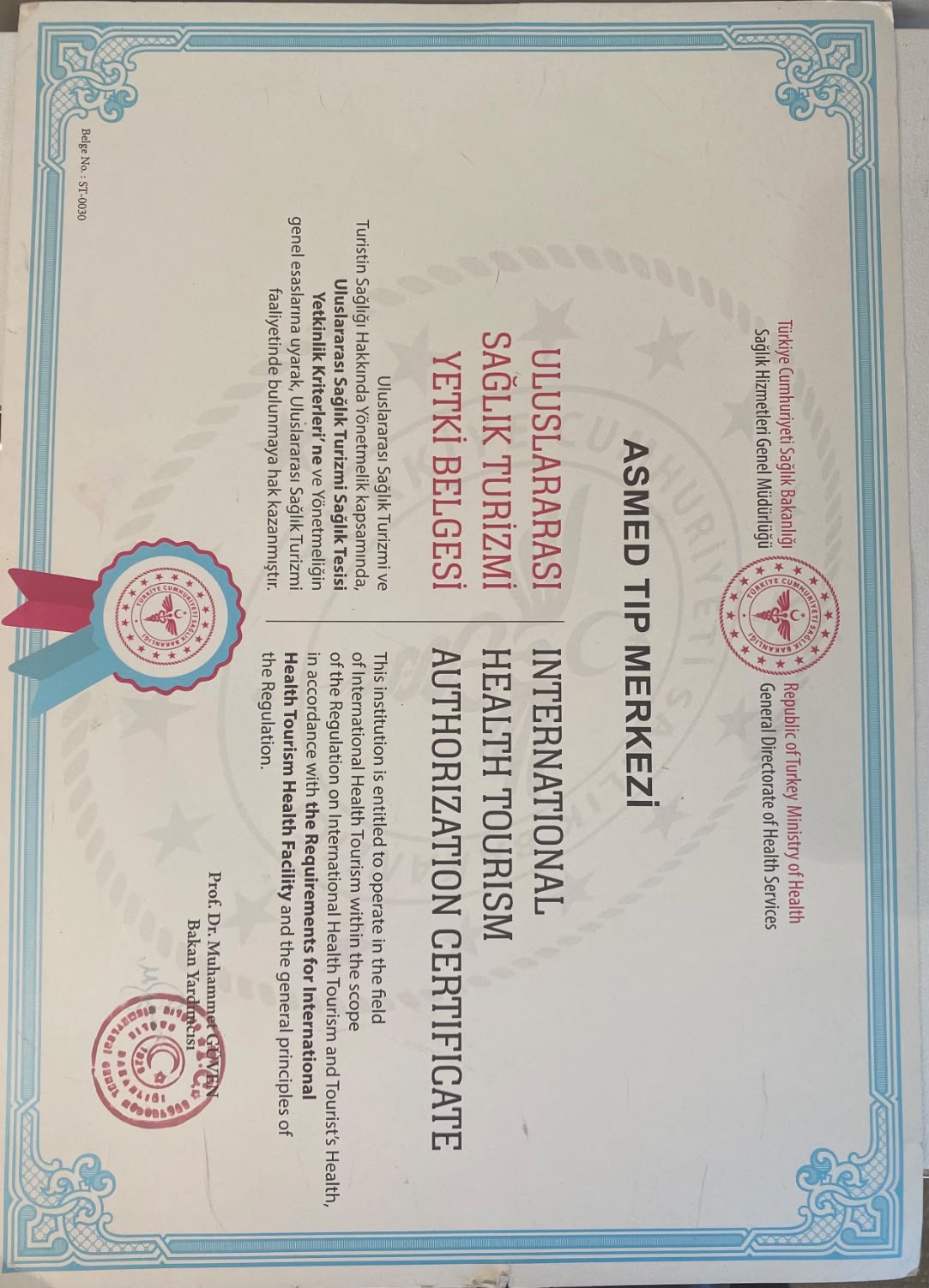
Uluslararası Sağlık Turizmi Yetkili Sağlık Tesisi
ASMED Tıp Merkezi, T.C. Sağlık Bakanlığı tarafından uluslararası sağlık turizmi alanında hizmet sunmak üzere yetkilendirilmiş bir sağlık tesisidir.
Sağlık Tesisi Sahibi: ASMED ÖZEL SAÇ EKİMİ SAĞLIK HİZMETLERİ TİCARET A.Ş.
Yetki Belgesi No: ST-0030
International Health Tourism Authorized Healthcare Facility
ASMED Medical Center is a healthcare facility authorized by the Republic of Türkiye Ministry of Health to provide services in the field of international health tourism.
Owner and Operator: ASMED ÖZEL SAÇ EKİMİ SAĞLIK HİZMETLERİ TİCARET A.Ş.
Authorization Certificate No.: ST-0030

Atatürk Mah. Sedef Caddesi No: 1/1 Ataşehir - İstanbul
Cookie Declaration - Update Date: 11.11.2026 - Editor: Ozer Erik - Tel: +90 216 464 11 11