
Best Countries for Hair Transplant: A Detailed Comparison
Many people report that their hair falls out in the morning every day. This situation can cause mild panic or a general sense of hopelessness. When this situation occurs again, people may be shocked and begin to look into how to stop hair loss. Hair loss can be temporarily halted with shampoo or various hair tubes, but hair will continue to fall in the long run. As a result, many people will opt for hair transplant surgery. However, one of the most important questions that people considering the best hair transplant have is, "How To Choose The Best Country For Hair Transplant?’’
Whether you are just beginning your research or ready to book a clinic, this guide covers everything you need to know, from understanding why medical travel for hair restoration has become so popular, to comparing the best countries for hair transplant side by side, to knowing exactly what questions to ask before you commit.
Why Do People Travel Abroad for Hair Transplants?
Hair restoration medical tourism has increased tremendously during the past decade, and it is easy to see why. When one looks at a country like the UK, America, Australia, or any other part of Western Europe, the price for a single hair transplant session might be several thousands of pounds or dollars, which will price out most patients that require hair transplantation. Visiting another country where you get the same quality surgery for just a fraction of the price is very practical.
In addition to cost issues, patients opt for hair transplant clinics in foreign countries because they are highly specialised, have shorter waiting periods, and also allow patients to combine their therapy sessions with vacation time. Many top hair transplant destinations have clinics that have invested a lot in modern equipment and training surgeons that are specialised in carrying out hair transplantations.
Language assistance, bundled services including airport transfers, accommodations, and follow-ups, as well as electronic communication technologies to keep the patient in touch with the clinic after they go back home, have definitely taken away much of the fear associated with the whole ordeal. For many individuals, having a hair transplant abroad is not an option of last resort; it is a common sense decision.
Key Criteria for Choosing the Best Country for a Hair Transplant
With our assistance, you can determine the best country in the world for hair transplantation. You can read our in-depth guide and review on how to find the best country or countries, clinics, hospitals, and surgeons for the best hair transplant surgery here. Simply get the metrics and decide what is important to you and how they will affect your hair transplant. Our criteria include cost, clinic and surgeon experience, post-surgery care, accommodation, airport + hotel + clinic transfers, language assistance, cost of living, and obtaining a visa.
Experience of the clinics and surgeons are one of the most important considerations for anyone looking for the best hair transplant clinics in the world. If you are looking for something in another country, it means that price is important to you. Particularly the global economic damage caused by rising inflation during and possibly after the pandemic years. You should also keep in mind that price isn't always the best indicator. You can get offers that are much lower than the average price, but cheap treatments can cause problems and may indicate that the doctor's skill or the quality of the treatment has been compromised.
This is the second critical issue. Clinics', surgeons', dermatologists', medical personnel's, and technicians' experience will be extremely beneficial in regrowing your hair. For your hair loss treatment and surgery, you should go to a reputable surgeon, clinic, or hospital. Experience also refers to the number of patients served by the surgeons and clinics. A country can have well-known and high-quality surgeons and clinics. However, if this country does not attract a sufficient number of medical tourists for hair transplant surgeries, the experience may begin to fade.
You should be aware that hair transplantation surgeries are required by law in many countries to be performed by dermatologists, plastic surgeons, or physicians with a medical aesthetics medicine certificate. The number of plastic surgeons in the country, as well as the number of International Society of Hair Restoration Surgery (ISHRS) members and Joint Commission International (JCI) accredited hospitals in the country, can give you an idea of which country has the best hair transplant doctor, clinics, and hospitals in the world. However, this is not a critical issue because it may cause the price to rise.
When evaluating your options, it also helps to consider the regulatory environment of the destination country. Nations with formal licensing requirements for hair transplant surgeons and with active medical oversight bodies generally provide a safer environment than markets where clinics operate with minimal regulation. Accreditation by internationally recognised bodies is a useful proxy for quality and patient safety standards.
Best Countries for Hair Transplant: A Side-by-Side Comparison
Patients seeking out the ideal country for a hair transplant will always encounter the same select few options. These countries all have their own advantages, and it really depends on what you’re looking for when it comes to your personal criteria.
Turkey enjoys a high status worldwide as a leading provider of hair transplantation tourism. Turkey offers a lot of specialist clinics, a wealth of qualified surgeons, and affordable prices, which are all ensured by the developed patient packages including transportation and accommodation from the beginning till the end of the procedure. In terms of sheer volumes, Turkish surgeons obtain practical skills faster than their peers in most other countries.
Thailand is a reputable destination, especially for patients coming from Australia and Southeast Asia. The private hospitals in Thailand are accredited internationally, English speaking is common, and medical tourism is not limited to hair restoration in Thailand only. Prices are reasonable, less than in Western Europe, but more than in Turkey.
India boasts a large number of skilled dermatologists and plastic surgeons and has set up centers for hair transplantation in cities like Mumbai and Delhi. Prices can be highly competitive. The difference between high-end and low-end clinics in terms of quality in India can be greater than in Turkey, making research essential.
The popularity of Poland and Hungary is growing among Western Europeans; in particular, among UK, German, and Scandinavian patients. Both nations boast a regulated medical system, short distances to fly, and prices which are significantly lower than those in Western Europe but somewhat higher than in Turkey.
Last but not least, Spain and Greece provide alternative destinations in Europe. Both countries offer skilled doctors and a strong tourist infrastructure, which allows easily combining your treatment with some rest in the nice weather. Unfortunately, the prices in both nations are close to the average Western European price.
Comparison of the Best Countries for Hair Transplant
| Country | Average Price Range | Popular Techniques | Primary Advantages | Package Inclusions |
|---|---|---|---|---|
| Turkey | £1,500–£3,500 / $1,800–$4,500 | Sapphire FUE, DHI, Standard FUE | High surgeon volume and experience, best value, advanced all-inclusive packages | Surgery, 4/5-star hotel, VIP transfers, post-op products, and remote follow-up |
| Thailand | £3,000–£5,500 / $3,500–$7,000 | FUE, Sapphire FUE, FUT | Internationally accredited private hospitals, ideal for combining treatment with a vacation | Surgery, consultations, and basic post-operative care |
| India | £1,200–£3,000 / $1,500–$3,500 | FUE, FUT, Direct Hair Implantation | Budget-friendly, highly skilled English-speaking specialists | Surgery and consultation (accommodation usually extra) |
| Poland / Hungary | £2,500–£5,000 / $3,000–$6,000 | FUE, FUT | EU medical regulations, short flight times for Western and Northern Europeans | Surgery, medical assessment, and local transfers (varies by clinic) |
| Spain / Greece | £4,000–£7,000 / $5,000–$8,500 | FUE, DHI | Strict European standards, strong tourist infrastructure, and pleasant weather | Surgery, initial consultation, and basic post-operative follow-up |
| UK / USA | £8,000–£12,000+ / $8,000–$15,000+ | FUE, FUT | Local procedure, no international travel required | Procedure and consultation only (typically charged per graft) |
Why Turkey Is Considered the Best Country for Hair Transplant
There are numerous reasons to establish a plantation in Turkey. One of the most important reasons is that hair transplant fees in Turkey are low in comparison to other countries. Discover hair transplantation in Turkey that does not compromise the quality of hair transplantation services. Professional procedures and surgeries are carried out by hair transplant devices and surgeons. In Turkey, FUT and FUE hair transplantation techniques are significantly advanced and painless once you reach your new hair.
Turkey can be considered as the best country for hair transplant in the world by means of affordable prices, quality of service, communication skills, hospitality, reputation and experience of the plastic surgeons, clinics and hospitals providing best hair transplant surgeries with the latest technology equipment and professional medical team of dermatologists and technicians.
A significant factor behind Turkey's dominance is the concentration of specialist clinics in Istanbul. A hair transplant in İstanbul gives patients access to some of the most experienced teams in the world, often at prices that represent a saving of sixty to eighty percent compared with equivalent procedures in Western Europe or North America. To understand more about why this destination has become so popular, it is worth reading about Why Do People Go to Turkey for Hair Transplants, the reasons go beyond cost alone and include the level of care, the all-inclusive packages, and the country's unique position as a bridge between East and West.
Turkey also benefits from a competitive market that has driven clinics to invest continuously in training, technology, and patient experience. Government support for medical tourism has further professionalised the sector. Many leading Turkish clinics now hold JCI accreditation and have surgeons who are active members of the ISHRS, combining international standards with the volume-driven expertise that comes from treating thousands of patients each year.
Hair Transplant Costs by Country
Cost is almost always among the first questions patients ask when exploring their options for hair restoration abroad. While prices vary by clinic, technique, and the number of grafts required, it is possible to give a general picture of what patients can expect in each major destination.
In the United Kingdom, a FUE hair transplant typically starts at around £3,000–£4,000 for a modest session and can rise well above £10,000 for larger cases. In the United States, the range is broadly comparable in dollar terms, with many providers charging per graft rather than offering a flat-fee package.
By contrast, a comprehensive package in Turkey, including the procedure, hotel accommodation, airport transfers, and follow-up support, often comes in at a fraction of that figure. India and Thailand offer pricing that is also substantially lower than Western markets, though the all-in package model is less universal there. Poland and Hungary sit in an intermediate band, providing a meaningful saving for UK and Northern European patients without requiring long-haul travel.
It is important to compare what is included in each quote. A low headline price that excludes accommodation, consultations, and post-operative care may end up costing more in total than a higher flat-fee package that covers everything. Always request a fully itemised breakdown before making a decision.
Hair Transplant Techniques Available by Country
The technique used in your hair transplant has a direct bearing on the naturalness of the result, the speed of recovery, and the suitability of the procedure for your particular pattern of hair loss. The two dominant methods are Follicular Unit Extraction (FUE) and Follicular Unit Transplantation (FUT), and availability varies between destinations.
The most frequently applied procedure in the world is FUE, which is offered by every one of the leading countries for hair transplants. In this process, follicular units are individually taken from the donor region and implanted in the recipient region without leaving any visible scar. The Sapphire FUE procedure, which is one of the advanced FUE techniques, is offered by many clinics in Turkey, Thailand, India, and all across Europe.
FUT requires the removal of a scalp strip and its dissection into individual grafts. Although FUT is no longer as common as it used to be, it is still available in many places around the world especially where surgeons have to extract as many grafts as possible from one surgery session on people with very extensive hair loss.
DHI (Direct Hair Implantation) is an alternative form of FUE, where a pen-shaped tool is used to implant the grafts directly into the scalp without creating recipient sites. DHI is a very popular method in Turkey due to its accuracy and because surgeons can control the angle and depth of each graft.
When comparing countries, Turkey again stands out for the breadth of techniques on offer and the frequency with which surgeons deploy them. Because Istanbul's leading clinics carry out a high volume of procedures, their teams develop fine-grained proficiency with each method that is difficult to replicate in lower-volume markets.
FAQs About Best Countries for Hair Transplant
Which country has the most experienced hair transplant surgeons?
Turkey, and Istanbul in particular, is widely considered to have the highest concentration of experienced hair transplant surgeons in the world. The volume of procedures performed in the country each year means that Turkish surgeons accumulate hands-on experience rapidly. That said, highly skilled surgeons also practise in Thailand, India, and across Europe, so the key is always to research the individual surgeon's credentials, case history, and patient outcomes rather than relying solely on the country's reputation.
Is it safe to get a hair transplant in another country?
Getting a hair transplant abroad is generally safe when you choose a reputable, well-regulated clinic with a qualified surgeon. The most important safeguards are to verify the surgeon's credentials, confirm that the clinic operates under the country's medical licensing framework, and look for internationally recognised accreditation such as JCI. Reading verified patient reviews and requesting before-and-after photographs from real cases at the specific clinic, not just generic images, will give you a clearer sense of what to expect. Avoid clinics that are reluctant to share this information or that offer prices that seem implausibly low.
How much cheaper is a hair transplant abroad compared to the UK or USA?
The saving can be substantial. Patients travelling from the UK or USA to Turkey, for example, frequently report paying sixty to eighty percent less than equivalent domestic prices, even after factoring in travel and accommodation costs. For a procedure that might cost £8,000–£10,000 in London, an all-inclusive package in Istanbul from a reputable clinic can come in at a fraction of that. Savings in other destinations such as India and Thailand are also significant, though the precise figure depends on the clinic, the technique, and the number of grafts required.
What happens if I have complications after returning home from my hair transplant?
This is one of the most important questions to ask any clinic before booking. Reputable clinics in leading destination countries, especially in Turkey, typically provide a structured aftercare protocol that includes remote follow-up consultations via video call, written guidance on post-operative care, and a clear point of contact for questions or concerns. If you experience a complication, your overseas clinic should be your first port of call, most issues can be assessed and guided remotely. For anything that requires in-person intervention, you would need to consult a local dermatologist or plastic surgeon. This is another reason to choose a well-established clinic with a proven aftercare record rather than opting for the cheapest available option.
Do I need a visa to travel to Turkey for a hair transplant?
Visa requirements for Turkey depend on your nationality. Citizens of many European countries, including the United Kingdom, can currently enter Turkey visa-free or obtain an e-Visa online before travel, which is a straightforward process. Citizens of the United States, Canada, and Australia are also typically eligible for the e-Visa. It is always advisable to check the current requirements via your own government's travel advice pages or the official Turkish e-Visa portal before booking, as entry requirements can change. Your clinic's patient coordinator will usually be able to advise you on the process as well.
Our patient’s health is our top priority at Asmed. When it comes to hair transplantation in Istanbul, you can come to us and get information from our doctors with peace of mind. We strive to provide our patients with the highest level of medical care in order to ensure their safety and comfort. We provide each patient with detailed information about the procedure based on their specific requirements and needs, as well as advice on how to care for their hair transplant recovery.
To learn more about hair transplant cost in Turkey, book hair transplant free consultation with our expert medical team.
Get a Free Consultation!
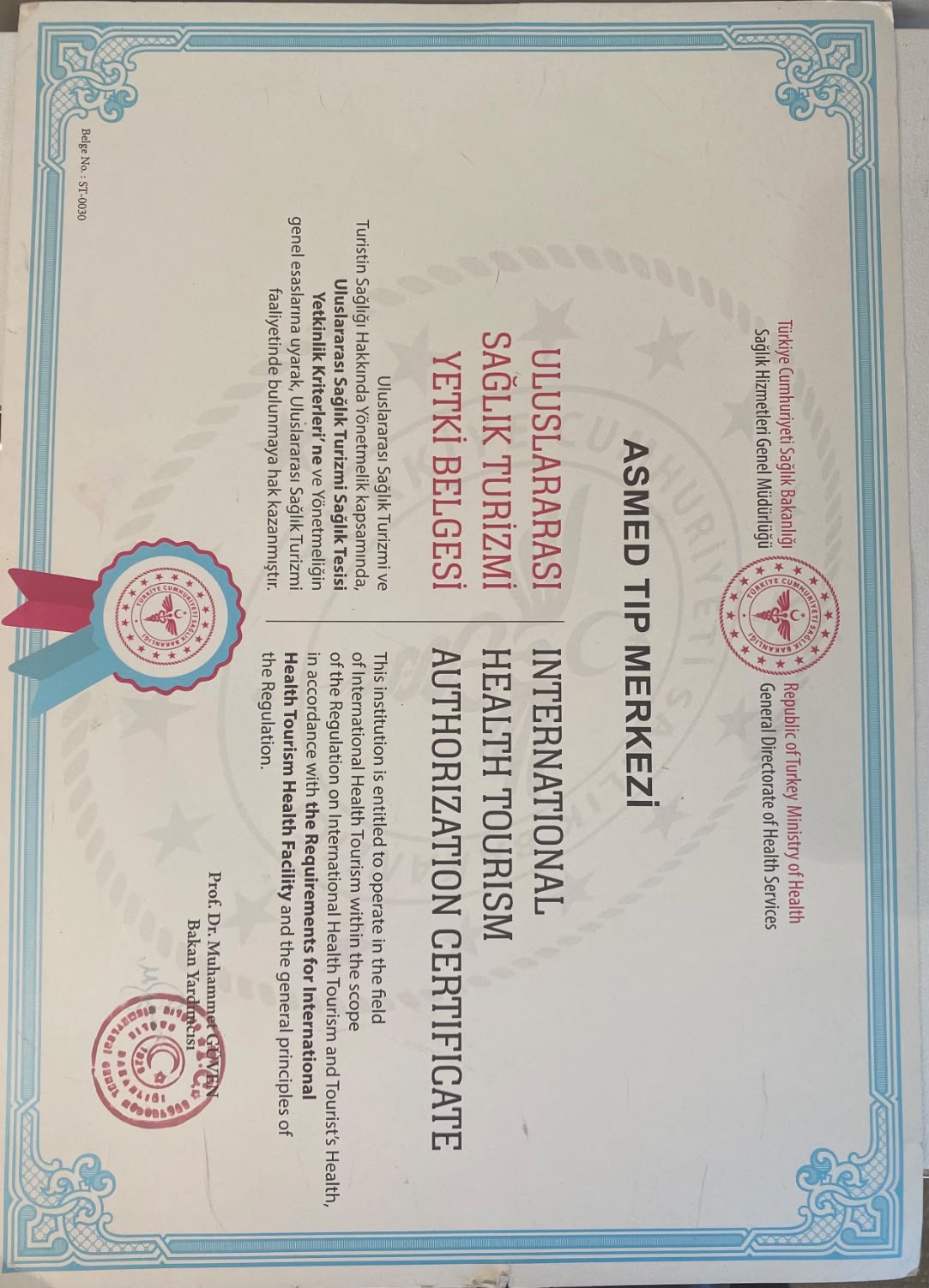
Uluslararası Sağlık Turizmi Yetkili Sağlık Tesisi
ASMED Tıp Merkezi, T.C. Sağlık Bakanlığı tarafından uluslararası sağlık turizmi alanında hizmet sunmak üzere yetkilendirilmiş bir sağlık tesisidir.
Sağlık Tesisi Sahibi: ASMED ÖZEL SAÇ EKİMİ SAĞLIK HİZMETLERİ TİCARET A.Ş.
Yetki Belgesi No: ST-0030
International Health Tourism Authorized Healthcare Facility
ASMED Medical Center is a healthcare facility authorized by the Republic of Türkiye Ministry of Health to provide services in the field of international health tourism.
Owner and Operator: ASMED ÖZEL SAÇ EKİMİ SAĞLIK HİZMETLERİ TİCARET A.Ş.
Authorization Certificate No.: ST-0030

Atatürk Mah. Sedef Caddesi No: 1/1 Ataşehir - İstanbul
Cookie Declaration - Update Date: 11.11.2026 - Editor: Ozer Erik - Tel: +90 216 464 11 11