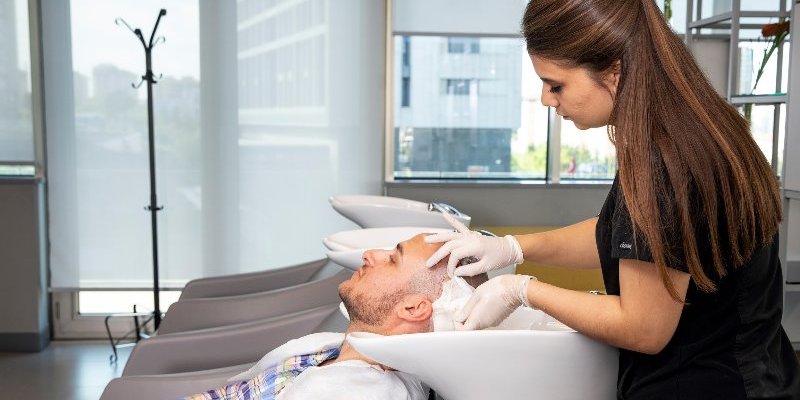
Hair Washing After Hair Transplant: When and How?
Hair washing is one of the most important steps of protecting the new transplanted grafts. It is critical to know how to handle the first wash. Many patients worry about this step due to the healing process. Knowing when to take the first head wash after hair transplant is important to have long term success in hair transplant.
Patients who have had hair transplants frequently have questions about the procedure. They also have a lot of questions about what happens after a hair transplant procedure. How to wash your hair after hair transplant surgery is one of the most frequently asked questions. This is extremely important. The success of your hair transplant is not solely dependent on the skill of your hair restoration technician. It also depends on how well you care for yourself in the days following.
Wait 48 hours after hair transplant surgery before washing your hair. You can, of course, take a shower before that, but keep your hair dry. You can start washing your hair 3 days after your hair transplant. For the first 5 days, use extreme caution when washing your hair. A gentle hair wash will not harm the newly implanted follicles, but proceed with caution. Scrubbing too hard may dislodge a graft, which you do not want.
How To Wash Hair After Hair Transplant?
Being gentle is an important start for how to wash hair after hair transplant. First wash should never involve rubbing or hard scratching. Even avoid direct water pressure on the transplanted area to be more gentle. Usually, a special medical shampoo or foam is applied by softly tapping it onto the scalp. The shampoo is left on for a few minutes to soften scabs, then rinsed gently using lukewarm water poured from a cup or low-pressure shower setting. Pat drying with a clean towel is recommended, never rub.
When To Take First Head Wash After Hair Transplant?
The first hair wash after hair transplant is typically done 24 to 72 hours after the procedure, depending on your clinic’s protocol and the technique used. Some clinics perform the first wash themselves to demonstrate the correct method. Following your doctor’s instructions is crucial, as washing too early or too aggressively can dislodge grafts.
How Often To Wash Hair After Hair Transplant?
After the first wash, hair is usually washed once a day. Daily washing helps remove dried blood, scabs, and excess oil while keeping the scalp clean. This routine typically continues for 7–10 days until scabs naturally fall off. Skipping washes or washing too frequently can slow healing, so balance is key.
What Should You Be Careful While Washing Your Hair After Hair Transplant?
Avoid putting your head directly under the shower head. Many shower heads are extremely powerful, especially if you have a massage shower head. Again, gentleness is the watchword. A rain or rainfall shower head that distributes water over a large area is ideal for the job.
Filling a cup with water and pouring it over your head is the best way to ensure you're being as gentle as possible. The washing should also be done with care. Squeeze a small amount of shampoo into your hand, lather it up between your hands, and then gently rub it into your hair.
This is the method that our Asmed team prefers: Pour a little shampoo into the bottom of a cup, fill it with water, and then gently massage your head with the bubbly solution. Depending on how much hair you have, repeat this process a few times.
Itching is common for a few days following a hair transplant. Small red dots will initially cover the donor area, which is where your follicles were extracted from. Following your surgery, these dots will begin to scab over. If you are bothered by itching, apply conditioner to the donor area. This helps to alleviate itching. If any scabs remain after 7 days, apply conditioner to the affected area. Massage gently in a circular motion to encourage the scabs to fall off.
During the first week following the operation, it is critical to avoid touching the recipient areas as much as possible. Patients are asked to sleep on their backs, with their heads elevated on a few pillows. The pillows reduce swelling that can occur after a hair transplant by raising your head during the night.
Although some numbness and mild soreness in the scalp can be expected for several days after surgery, most patients feel fine within a day or two. On the recipient and donor sites, there will be punctate red scabs at the bottom of the transplanted hair shafts for about 7-10 days. Typically, the patient regains his or her normal appearance within 10-15 days of surgery. Following this period, only minor redness may be visible. Patients with very light skin may experience prolonged redness after treatment, whereas those with darker hair and skin tend to recover faster. Overall, recovery from a hair transplant is a highly individual process that is influenced by the patient's age, lifestyle, diet, and even climate.
When Can I Wash My Hair Normally Without Restrictions?
Most patients can return to normal washing habits around 10 days after hair transplant surgery. At this stage, grafts are securely anchored, and gentle massage can be resumed. However, harsh shampoos, hot water, and strong pressure should still be avoided for a few more weeks.
FAQs About Hair Washing After Hair Transplant
Are the hair wash instructions the same for all hair transplants?
Not exactly. Instructions may vary depending on whether FUE hair transplant, DHI, or another technique is used, as well as individual healing speed. Always follow clinic-specific advice.
What water temperature is best for washing after a hair transplant?
Lukewarm water is ideal. Hot water can irritate the scalp, while cold water may cause discomfort during early healing.
Can I use regular water pressure for washing my hair?
No. Regular shower pressure should be avoided during the first 10 days. Low pressure or cup-pouring methods are safest until the grafts are fully secure.
Our patient’s health is our top priority at Asmed. Our prioritized goal is to provide our patients with the highest level of medical care possible in order to ensure their safety and comfort. We provide each patient with detailed information about the procedure based on their specific requirements and needs, as well as advice on how to care for their hair transplant recovery. We are aware that each of our patients has their own unique needs and requirements, our aim is to serve and fulfill those requirements with the highest level of care.
Book a hair transplant consultation with our expert medical team to learn more about hair transplant cost and procedures.
Get a Free Consultation!
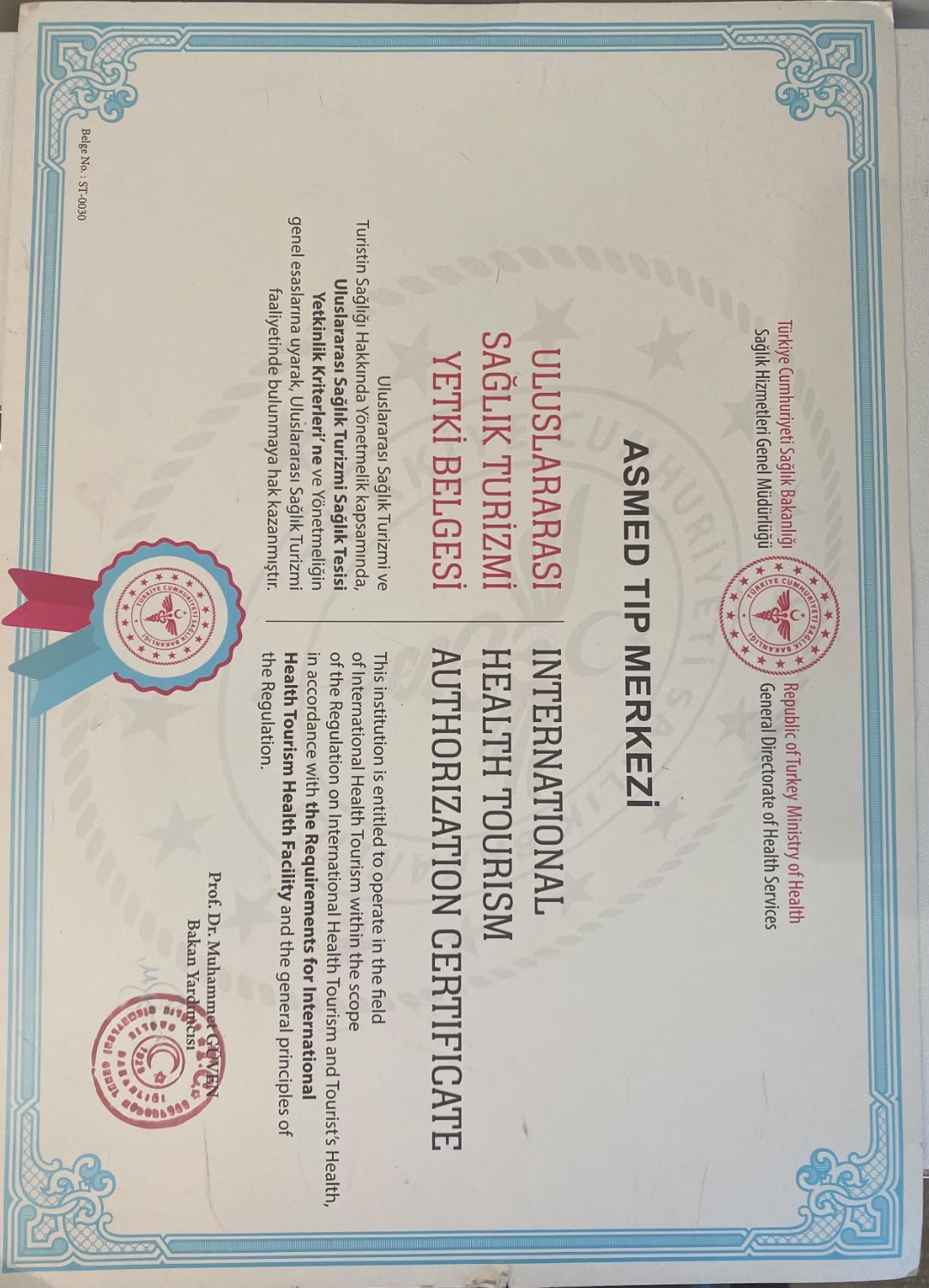
Uluslararası Sağlık Turizmi Yetkili Sağlık Tesisi
ASMED Tıp Merkezi, T.C. Sağlık Bakanlığı tarafından uluslararası sağlık turizmi alanında hizmet sunmak üzere yetkilendirilmiş bir sağlık tesisidir.
Sağlık Tesisi Sahibi: ASMED ÖZEL SAÇ EKİMİ SAĞLIK HİZMETLERİ A.Ş.
Yetki Belgesi No: ST-0030
International Health Tourism Authorized Healthcare Facility
ASMED Medical Center is a healthcare facility authorized by the Republic of Türkiye Ministry of Health to provide services in the field of international health tourism.
Owner and Operator: ASMED ÖZEL SAÇ EKİMİ SAĞLIK HİZMETLERİ A.Ş.
Authorization Certificate No.: ST-0030

Atatürk Mah. Sedef Caddesi No: 1/1 Ataşehir - İstanbul
Cookie Declaration - Update Date: 09.09.2026 - Editor: Ozer Erik - Tel: +90 216 464 11 11