
Hair Transplant For Thinning Hair
As you age, hair strands can become finer and provide less coverage. A scalp that becomes more visible in areas that once looked full may reflect changes in hair thickness as well as a reduction in hair count. For people with suitable donor hair, a transplant may be considered to help thinning areas look fuller.
This change is different from having naturally fine hair. Here, the focus is on the reduction in hair shaft thickness and coverage over time. For the role of naturally fine hair in transplant planning, see our guide to hair transplants for fine hair.
Why Can Hair Look Thinner with Age?
Hair shaft thickness affects how full the hair looks. As strands become finer with age and some follicles produce less hair, coverage may decrease. The timing and extent of this change vary from person to person. The cause of thinning is assessed through an examination. Age-related changes may occur alongside pattern hair loss, temporary shedding or other health conditions. The history of the loss, hair thickness across different regions and the condition of the donor area help determine an appropriate approach.
When Can a Transplant Help Thinning Hair?
During a hair transplant, grafts are taken from suitable donor areas and placed in the regions where greater coverage is intended. For people with enough suitable donor hair, this may help fill areas that have thinned with age and create a fuller appearance that blends with the existing hair.
Assessing achievable coverage involves more than graft count. Hair shaft thickness, the number of hairs in each graft, curl and the size of the recipient area are considered together. The plan also accounts for existing hair and possible future changes.
Why Diffuse Thinning Needs Careful Assessment
Diffuse thinning affects a wider area rather than one clearly defined patch. Some people have thinning mainly across the top while retaining a suitable donor region. In others, loss extends into the back and sides that would normally be considered for donation.
If the donor regions have also thinned, a reliable supply of hair may not be available. The surgeon assesses hair density and thickness across different regions before deciding on suitability.
Should Treatment or Monitoring Come First?
If the loss is changing quickly or the diagnosis is uncertain, medical treatment or observation may be advised before a surgical decision. Treating an underlying cause can be more useful than moving hair into an area that is still changing.
Treatment to preserve existing hair and a hair transplant can form part of the same long-term plan for suitable patients. The options are assessed individually.
How ASMED Plans Treatment for Suitable Patients
At ASMED, the aim is natural coverage that works with your existing hair. Donor regions, the proposed recipient area and possible future hair loss are considered together before a graft distribution is agreed.
With Manual FUE, grafts are collected individually using hand-operated punches adapted to the patient's hair. The recipient design considers existing hair and natural growth directions, and Dr. Koray Erdoğan personally creates the recipient sites. Graft distribution is planned according to the intended coverage and donor capacity.
Grafts are placed individually into the pre-created recipient sites using K.E.E.P. (Koray Erdoğan Embedding Placer), an instrument developed by Dr. Erdoğan for precise and controlled graft placement. ASMED does not use implanter pens during implantation.
Our hair transplant candidacy guide explains the assessment process. To discuss your thinning hair and goals, complete the online consultation form with the requested photographs and medical background. Following the preliminary assessment, the final surgical plan is determined during an in-person examination.
Get a Free Consultation!
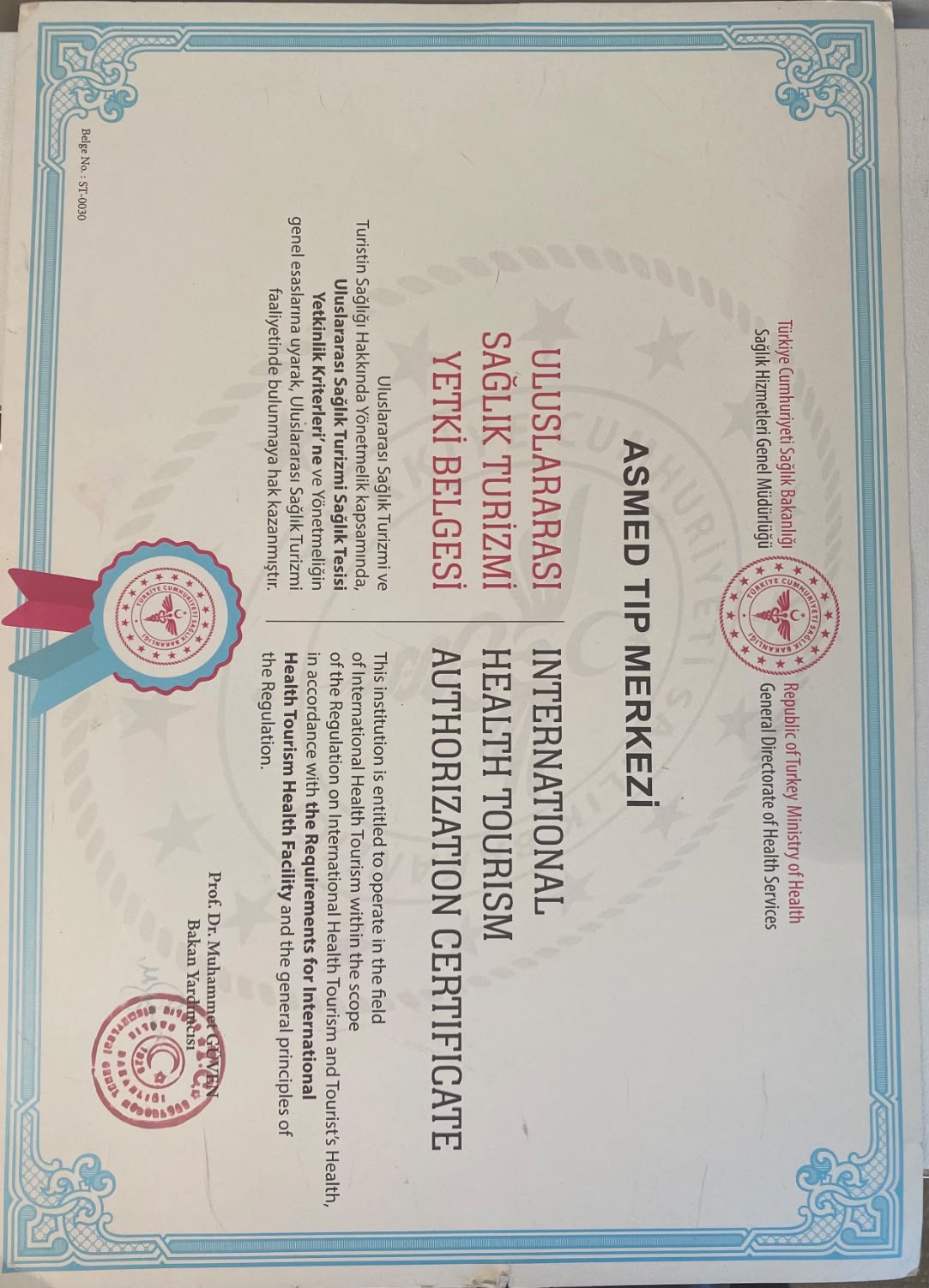
Uluslararası Sağlık Turizmi Yetkili Sağlık Tesisi
ASMED Tıp Merkezi, T.C. Sağlık Bakanlığı tarafından uluslararası sağlık turizmi alanında hizmet sunmak üzere yetkilendirilmiş bir sağlık tesisidir.
Sağlık Tesisi Sahibi: ASMED ÖZEL SAÇ EKİMİ SAĞLIK HİZMETLERİ TİCARET A.Ş.
Yetki Belgesi No: ST-0030
International Health Tourism Authorized Healthcare Facility
ASMED Medical Center is a healthcare facility authorized by the Republic of Türkiye Ministry of Health to provide services in the field of international health tourism.
Owner and Operator: ASMED ÖZEL SAÇ EKİMİ SAĞLIK HİZMETLERİ TİCARET A.Ş.
Authorization Certificate No.: ST-0030

Atatürk Mah. Sedef Caddesi No: 1/1 Ataşehir - İstanbul
Cookie Declaration - Update Date: 24.11.2026 - Editor: Ozer Erik - Tel: +90 216 464 11 11