
Temporary Hair Loss: Symptoms, Causes and Treatments
Human hair consists of a protein that is called keratin. Our hair follicles produce this protein in the outer layer of our skin. Whenever new cells are created, old ones are pushed through the scalp. This is called the hair growth cycle. This pushing process is what we call the growth of hair. The number of hair on a person’s scalp varies, but the average number is 100.000. When it comes to hair loss, again, the number of shredded hair depends on the person’s diet, stress level, genetic factors, and so on. However, the average number for hair loss is between 30 and 150 hairs a day.
The problem with hair loss is that it damages our self-esteem highly when it is excessive. Therefore, it is very important to detect the causes of hair loss and find ways to treat it if possible. If it is not possible to treat hair loss, there are procedures like hair transplants that will help your self-esteem to grow.
Temporary hair loss can have numerous reasons. The good thing about temporary hair loss is it is easily treated. Here are types of hair loss that are short-term:
What Is Temporary Hair Loss?
Hair loss that occurs temporarily does not cause any harm to the hair follicle, but leads to excessive hair shedding or hair thinning in a period of weeks or months. The fact that follicle does not get affected at all makes it possible to grow hair back after finding the cause of the problem. Temporary hair loss differs from other types of hair loss by that it does not affect follicle's health and its genetic code does not lead to shrinking over time. It is important to know whether the condition is temporary as it means that one needs to solve the problem and not to compensate for its results. However, there may be certain problems that will arise in case the condition is left untreated for too long.
Common Types of Temporary Hair Loss
Several distinct conditions fall under the umbrella of temporary hair loss, each with its own mechanism and timeline. The most frequently encountered are the following. Telogen effluvium is probably the most common form of temporary shedding. It happens when a large share of follicles are pushed into the resting (telogen) phase at the same time, producing diffuse shedding across the whole scalp roughly two to four months after a triggering event, illness, surgery, or severe emotional stress being the usual culprits.
Alopecia areata is an autoimmune condition that can show up as patchy hair loss on the scalp or body. Though it's classified separately from purely stress-induced shedding, mild cases often clear on their own or with treatment, making it a potentially temporary form of loss for many patients.
Traction alopecia comes from prolonged mechanical tension on the follicles, tight braids, ponytails, or extensions are common causes. If the tension is relieved early, before the follicle scars, the hair will typically grow back. Medication-induced hair loss and postpartum shedding are also common temporary types, both covered in more detail in the sections below.
Temporary Hair Loss Symptoms
Identification of the signs of temporary hair loss can prevent unnecessary stress on your part and help you take action sooner. The primary symptom is increased hair shedding on a daily basis, with an unusually high number of hair strands ending up on your pillow, in the sink, or even in your hairbrush. Unlike patterned shedding, which occurs in one localized area, diffused hair shedding usually affects the entire scalp surface but not enough to cause bald spots.
Permanent hair loss, however, has its typical pattern, receding hairline or thinning of the crown in men, or widening of the parting on the top of the head in women. The fundamental distinction here lies in the fact that with permanent hair loss, the hair follicles become smaller and ultimately stop functioning, whereas in the case of temporary hair loss, they remain alive.
Timing is another useful clue: if shedding began two to four months after a stressful event, illness, crash diet, or hormonal shift, a temporary cause is far more likely. A dermatologist can confirm this with a scalp examination or a pull test, and sometimes a blood panel to check for deficiencies or hormonal imbalances.
Temporary Hair Loss Causes
Stress-Related Hair Loss
Stress and hair loss are very related. In fact, stress could be the reason for various changes in our bodies. It affects us both mentally and physically. Hair loss due to anxiety, for instance, is a very common type of hair loss. What happens is your body pushes too many hair follicles into an early resting phase due to stress. This leads to the shedding of hair.
Medications
Medications influence our hormonal balance. Hormonal changes or problems usually show themselves with hair loss or thinning of hair. Some antidepressants could also cause hair loss easily. Asking your doctor if they can change the prescription might be a solution to this type of hair loss.
Sudden Weight Loss or Extreme Diets
Extremely strict diets or diets that do not consist of enough protein or omega-3 will lead to deprivation of essential necessities of your hair. Diet-based hair loss might be temporary, but it is very dangerous. If you are dealing with hair loss without having genetic factors that cause it, you might want to change your diet first.
Childbirth
Postpartum hair loss is very common among women. Childbirth is a very stressful process for human bodies. So are post-childbirth periods. It is very natural to lose more hair after you give birth, so you do not have to worry. You can use hair care products that will balance the fluctuated estrogen levels in your body.
If you are looking for ways of how to stop hair loss, here are some suggestions: Include foods that are rich in omega 3, protein, and zinc in your diet. Try to avoid stress as much as possible. Avoid heat processes such as perming, blow-drying, hair straightening, and so on. Consider seeking medical support.
How Long Does Temporary Hair Loss Last?
One of the first things people want to know after noticing increased shedding is how long it will last. The honest answer is that it depends heavily on the underlying cause and how quickly it's addressed. With telogen effluvium triggered by a single identifiable event, a high fever, surgery, or a very stressful stretch, shedding typically peaks around three to four months after the trigger, then gradually slows as new hairs start to come in. Full visible regrowth can take anywhere from six to twelve months from the point when shedding stops.
Postpartum hair loss usually ceases within six months after childbirth due to stabilization of estrogen levels. Drug-induced hair loss is expected to resolve itself within a few months after changing or discontinuing use of the drug responsible for this problem, but this is possible only under the guidance of a specialist. Deficiency-related hair loss can be cured much slower since the body requires time not only to compensate for the deficiency but also to activate the dormant follicles.
Temporary Hair Loss from Stress
Hair loss due to stress should be tackled separately as it is one of the least understood causes. The human body has a way of diverting attention and energy away from activities it finds non-vital whenever it feels any kind of mental or physical stress. Hair production, from the point of biological survival, can be considered non-vital. A considerable number of hair follicles go into the resting state ahead of their time, and it manifests itself only after some weeks or months down the line.
Many become concerned about the process and become even more stressed, thus perpetuating the cycle. Disruption of this cycle becomes a vital component of the recovery process. These steps can include engaging in regular exercise, ensuring sufficient rest, practicing meditation and, where necessary, getting professional psychological help. With regards to hair care, avoiding rough treatment of the scalp, any extreme styling or tight styles, and using excessive heat, helps prevent further stress to follicles that are already under strain. When the levels of stress revert back to normal, the follicles will consistently enter into the growth phase.
Temporary Hair Loss Treatment Options
Treating temporary hair loss is largely about addressing the root cause while supporting the scalp environment for the best possible regrowth. The following approaches are commonly recommended.
Nutritional correction is the starting point when deficiencies in iron, ferritin, vitamin D, zinc, or protein are identified. A balanced diet built around lean proteins, leafy greens, nuts, and seeds gives hair follicles the biochemical foundation they need. If dietary changes alone aren't enough, a doctor may advise supplementation.
Topical minoxidil is one of the few over-the-counter treatments with a well-established record for stimulating follicle activity and shortening the period of visible thinning. Applied once or twice daily to the scalp, it tends to work best when started early.
A sensible scalp care routine, gentle cleansing, avoiding harsh chemicals, cutting back on heat styling, helps protect fragile regrowth hairs as they emerge. Low-level laser therapy is another avenue some patients explore, though it's best discussed with a dermatologist before committing to it.
For cases where hair loss turns out to be more persistent or extensive than initially expected, it's worth understanding what more advanced options involve. A FUE hair transplant is a minimally invasive surgical option for patients whose loss has become permanent in certain zones, and consulting a specialist early gives you a clear roadmap no matter which direction your recovery takes. Many patients also ask about hair transplant cost during initial consultations, so they can plan ahead if non-surgical options don't deliver the results they'd hoped for.
When to See a Doctor About Temporary Hair Shedding
Sometimes hair loss is temporary and does not require any treatments, but there are certain signs that should not be overlooked. Make an appointment with your doctor if hair loss has continued for more than six months without showing any signs of stopping, if you have developed bald spots instead of general thinning, if the process has been accompanied by redness, itching, or pain in your scalp, or if you have just undergone any serious illnesses, including thyroid disorder, autoimmune disease, or a long-lasting illness. A trichologist or dermatologist will be able to examine your scalp and perform necessary blood tests in order to exclude any conditions that resemble hair loss.
FAQs About Scalp Temporary Hair Loss
Can temporary hair loss become permanent if left untreated?
In most cases, temporary hair loss won't become permanent just because some time passes, since the follicles remain structurally intact. Certain causes, though, traction alopecia from chronically tight hairstyles or prolonged inflammatory conditions in particular, can lead to follicle scarring if the trigger is never removed. That's why dealing with the underlying cause as soon as it's identified is always the safer choice, even when the shedding seems likely to clear up on its own.
How can I tell if my hair loss is temporary or permanent?
The most reliable route is a dermatologist consultation, but some general indicators can help point you in the right direction. Temporary loss tends to be diffuse and usually follows a clear triggering event; permanent loss typically tracks a recognizable pattern such as a receding hairline or crown thinning and progresses steadily over years. A scalp pull test, dermoscopy, or blood work will give you far clearer answers than self-assessment alone.
Does temporary hair loss grow back on its own?
Absolutely, it will in most cases, as long as the problem has been solved. After the follicle stops being under pressure due to either lack of nutrients, drugs, hormonal changes, and other reasons, it will return to the stage of growing. Hair regrowth normally starts with small fine hairs that appear on the scalp after a few months.
What is the fastest way to recover from temporary hair shedding?
The most effective way to restore your natural growth cycle is to remove the trigger that caused you to stop growing hair and give your body the proper nutrition, avoid being stressed, and be gentle with yourself and your scalp and hair. If your doctor suggests that you use topical minoxidil, then consistent application will help shift the follicles from their dormant state into the growth state sooner.
Is it normal to experience temporary hair thinning after illness or surgery?
Yes, this is entirely normal and very common. Both significant illness and surgery place considerable physiological stress on the body, which can push a large number of follicles into the resting phase at once. The resulting shedding usually becomes noticeable two to four months after the event. For most people, hair density returns to its pre-illness baseline within six to twelve months of the shedding peaking, without any specific hair loss treatment beyond general nutritional support.
Here in Asmed, we will be there for you to answer all of your questions regarding your hair health and treatments for hair diseases. If you are struggling with temporary or permanent hair loss, contact us, and we will try to find the best solutions for your problems.
You can consult the hair health professionals and doctors in Asmed easily. If you want to learn more about hair health, hair diseases, and hair transplant in Turkey, our team will be sure that you leave with no questions left in mind.
Ia-o consultație gratuita!
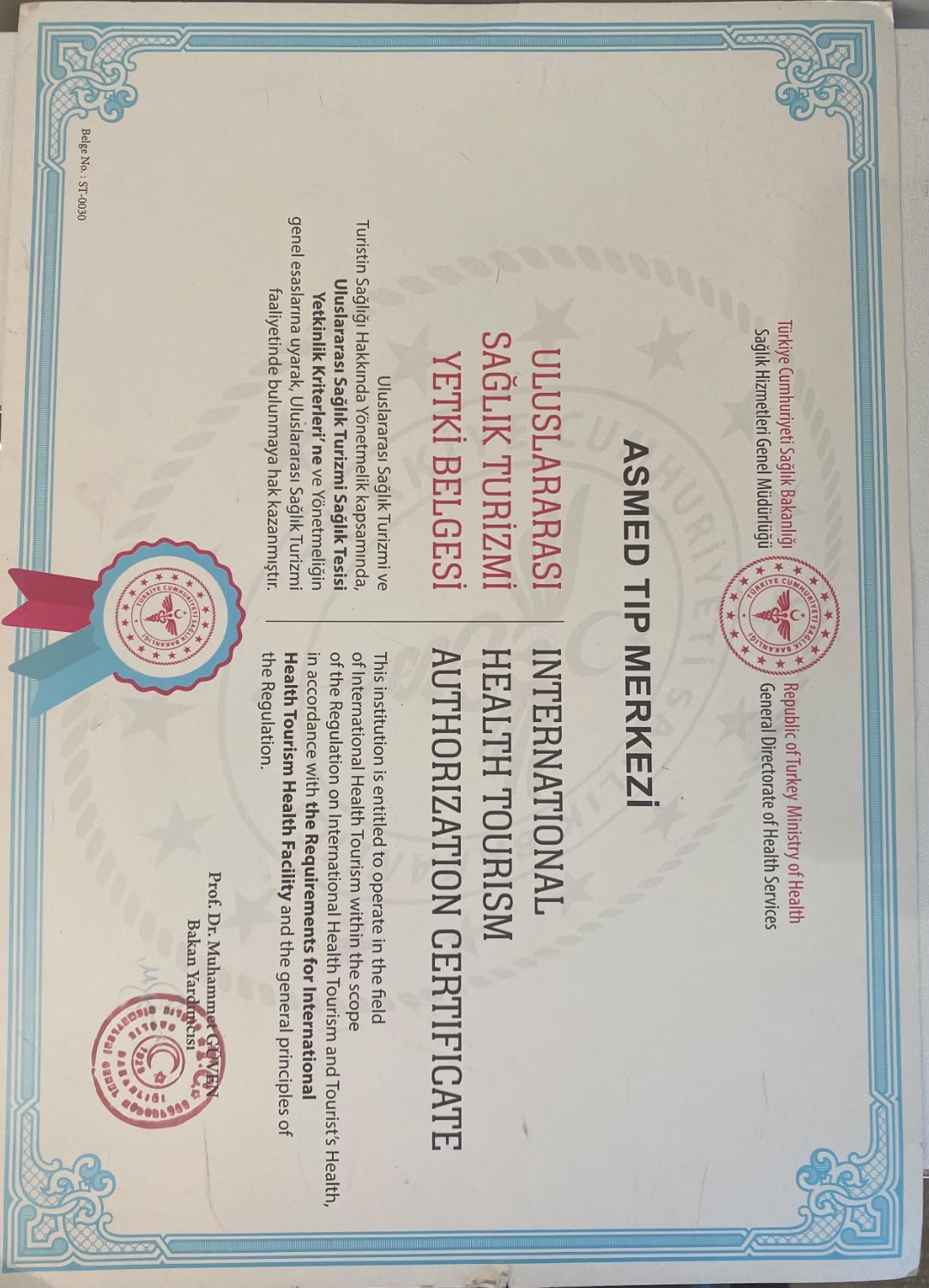
Unitate sanitară autorizată pentru turism medical internațional
ASMED Medical Center este o unitate sanitară autorizată de Ministerul Sănătății din Republica Türkiye să presteze servicii în domeniul turismului medical internațional.
Proprietar și operator: ASMED ÖZEL SAÇ EKİMİ SAĞLIK HİZMETLERİ A.Ş.
Certificat de autorizare nr.: ST-0030

Atatürk Mah. Sedef Caddesi No: 1/1 Ataşehir - İstanbul
Cookie Declaration - Update Date: 12.10.2026 - Editor: Ozer Erik - Tel: +90 216 464 11 11