
Does Wearing Helmet Cause Hair Loss?
For many sports and recreational activities, helmets are an absolute need. For example, nowadays, very few bikers ride without a helmet, which safeguards our heads and brain in the event of an accident. Helmets are necessary equipment, but they can potentially harm hair. Noticing more hair in your hands after pulling off a helmet, a hairline that seems to be creeping back, or a scalp that feels raw and irritated, these are more common complaints than most people realise. This article breaks down how and why helmet use can lead to hair loss, what the research actually tells us, and, most critically, what you can do to stop it before any damage becomes permanent.
How Does a Helmet Cause Hair Loss? The Science Explained
In order to explain the link between helmet use and hair loss, it is wise to look into the hair follicle. The hair follicle is located in the scalp and produces one hair. Excessive mechanical stress, heat, bacteria, or other environmental factors may influence the hair follicle's surroundings, resulting in the disruption of the hair growth process and shedding, even sometimes the miniaturization of the hair follicle.
There are three ways in which helmets cause hair loss, and they tend to operate concurrently. The first one is mechanical pressure, which means that when a helmet fits snugly on your head, it causes constant pressure on the hair follicles. This pressure comes from the bottom and from the sides. The other one is the creation of occlusive microclimate because of the enclosed environment that causes an increase in scalp temperature and accumulation of sweat. The third mechanism is friction while taking the helmet off.
Due to how they are worn, helmets can cause hair loss when worn frequently. The way you put on and take off the helmet could also cause temporary hair loss. Helmet use may lead to hair loss for the following reasons:
Traction Alopecia from Helmets
Traction alopecia is a disorder that develops when your hair is firmly bunched and worn in braids for an extended period. Daily helmet wearers have been found to have traction alopecia. People who have this condition may experience extreme hair loss.
The earliest signs of traction alopecia are easy to dismiss. A hairline that seems to be pulling back, especially at the temples and forehead, small pimples or follicular inflammation at the hairline margins, itching or tenderness, and thinning in the areas where the helmet's inner padding presses hardest are all worth taking seriously. Ignore them long enough without removing the source of tension, and the follicles can scar, turning what started as a reversible problem into a permanent one.
Not everyone is equally prone to the occurrence of traction alopecia when wearing helmets. Having hair tied in ponytail or bun style increases additional pressure on the hair above and beyond what the helmet does. Fine hair will break easier. Those individuals who wear a helmet for longer periods of time, motorcycle couriers, construction workers, long-distance commuter cyclists have higher levels of hair follicle pressure. Pre-existing scalp conditions such as seborrheic dermatitis or psoriasis make it more likely for this pressure to cause hair loss.
Does Wearing a Motorcycle Helmet Cause More Hair Loss Than Other Helmets?
Not all helmets carry the same risk. Full-face motorcycle helmets tend to be harder on hair than cycling helmets or hard hats for a few concrete reasons. They are heavier, which means more downward pressure on the scalp. They enclose the whole head, trapping considerably more heat and sweat. Getting one off usually requires a more forceful pulling motion, increasing friction across the hairline and crown. The inner padding in many motorcycle helmets is also dense foam rather than breathable fabric, giving sweat nowhere to go.
Cycling helmets are lighter and better ventilated, but the chin strap can still pull at hair near the ears and temples. American football and ice hockey helmets have internal cage structures that press against the scalp in their own particular ways. Hair loss from helmet use is a risk across every category, what matters most is how long the helmet is worn, how well it fits, and how well the design handles ventilation, not what sport or activity it's built for.
Is Helmet-Related Hair Loss Temporary or Permanent?
The issue of whether hair loss caused by helmets is reversible or not lies mostly on whether the situation is addressed immediately and the root cause of hair loss is attended to. Usually, when the loss is diffuse shedding or minor hairline recession, then the hair loss will be temporary. Remove pressure from the follicles and give the scalp time to heal and the results will be seen after 3 to 6 months.
Prolonged or severe traction alopecia is another matter. When follicles are repeatedly traumatised without any recovery period, they can enter a permanently dormant state or be replaced by fibrous scar tissue, at which point natural regrowth is no longer on the table. In those cases, options like a hair transplant Turkey procedure may be worth looking into. The most important point is that early action matters enormously. If you spot any of the warning signs described above, deal with them now rather than waiting to see how bad things get.
How to Prevent Hair Loss from Wearing a Helmet?
Wearing a helmet correctly involves using certain techniques. First, make sure not to tug at your hair with force as you put on your helmet. If you don't experience any pull while wearing your helmet, you are wearing it correctly. Additionally, it guarantees your defense against traction alopecia.
Technique aside, a handful of practical habits significantly cut the risk of hair loss from helmet use. Always put on a helmet over dry hair, wet hair is slightly swollen, more elastic, and more prone to breakage under friction, and a wet scalp sealed inside an enclosed helmet is an ideal environment for fungal growth. If your hair is long, skip the tight updo; a loose, low braid or leaving it down reduces root tension considerably. When taking the helmet off, use both hands and lift straight upward rather than rocking it forward or backward.
Keeping your scalp and hair clean daily is a crucial step you must adhere to religiously. Any buildup of sweat and grime in the roots of your hair might exacerbate scalp problems.
Wearing a tight or improperly fitting helmet might result in traction alopecia. Your hair is continually dragged backward as a result, which causes gradual hair loss. Choose a helmet that is the proper fit for you, neither too loose nor too tight.
To avoid any rubbing between your hair and the helmet, be certain to have a piece of natural cloth inside the lining. The natural fabric aids in absorbing sweat, protecting your hair and the helmet's interior lining from damage.
You need to take care of your helmet just as you would your hair. Remember to periodically clean your helmet, both inside and out. By doing this, any sweat and dirt buildup will be avoided. Keep it in a spot that is clean and well-ventilated while not in use.
The Role of Sweat, Fungal Infections, and Scalp Hygiene in Helmet Hair Loss
If you wear a helmet frequently over an extended period, it eventually becomes a breeding ground for different bacterial species growth that may result in hair loss. The accumulation of sweat and filth leads to an infection, which in turn leads to fungal development. Additionally, it might make your hair drier and prevent new hair growth, making FUE hair transplant the only option to have your hair back.
Sweat is not really the culprit; it is the result of sweat getting trapped on the scalp after hours. This changes the skin’s pH and breaks down the protective layer, which normally fights off fungi and bacteria. Tinea capitis, also referred to as scalp ringworm, is the fungus infection that develops in such an environment, leaving patches of hair loss, scaling, and even pus-filled bumps. Seborrheic dermatitis, a condition caused by the inflammation triggered by the naturally occurring yeast Malassezia, is also worsened by the occlusive nature of a helmet.
One of the best things that you can do to stop losing hair because of wearing a motorcycle helmet or another type of head protection is keeping the scalp clean. Using an antifungal shampoo, or a gentle salicylic acid shampoo, a couple of times each week should be enough for people who wear their helmets every day. It is advisable not to wash your scalp right away after taking off the helmet, since letting your scalp "breathe" for half an hour or so will minimize the risk of irritating it.
Choosing the Right Helmet to Minimize Hair Loss Risk
The evolution of helmets has been quite remarkable, and it does indeed matter when selecting one as far as scalp comfort is concerned. Opt for helmets that have more than just a single channel for air flow, especially around the top and sides of the helmet, as it helps minimize heat and sweat accumulation. An inner lining that can be removed for washing purposes, preferably from moisture-wicking material, is always better than having only foam inside.
The fit is equally important. When fitting right, the helmet must stay balanced on the head and be neither too loose nor too tight; you should be able to insert one finger between the liner and the temple bone without force. The helmet rocking sideways or backward is too loose and will produce friction each time you move your head. If the helmet marks your skin visibly in half an hour, it is too small. There are many specialized stores that provide professional fitting services; if you use a helmet daily, you will find them useful.
Does Wearing a Safety Helmet at Work Cause Hair Loss?
The hard hat that is worn at construction sites, manufacturing industries, and warehouse work is somewhat different from the motorcycle helmet in terms of health risks involved. It can be worn for between six and ten hours a day, five days a week. It does not fit as tight as a motorcycle helmet, and is well-ventilated compared to a motorcycle helmet; however, the amount of time spent wearing it on a daily basis is what makes it more risky.
Employees wearing protective helmets usually complain of hair loss in those parts of their scalps where the cradle system or brim of the helmet rests. There is also a lot of sweating in case of outdoor jobs or jobs which require physical labor. The preventive methods are similar in both cases. Scalp should remain clean, there should be an appropriate fitting for the helmet without being too tight, a cotton liner or one which prevents moisture buildup should be used, and during the breaks you should give time to air out your scalp.
When to See a Doctor About Hair Loss After Using a Helmet
The earlier you address hair loss problems, the more chance you are to avoid permanent harm. If your hair and scalp have been properly cared for, seasonal hair loss isn't a cause for concern. But if you neglect your hair and scalp, you can display seasonal hair loss symptoms, leading to permanent hair loss.
See a dermatologist or trichologist if any of the following develops: a clearly receding hairline at the temples or forehead that has worsened over several months of helmet use; patches of complete hair loss with smooth, shiny, or scarred skin at the centre; persistent scalp pain, tenderness, or inflammation; or shedding that continues, or accelerates, even after you've stopped wearing a helmet or overhauled your hygiene routine. A specialist can establish whether the loss is purely traction-related or whether an underlying condition, androgenetic alopecia, alopecia areata, or a scalp infection, is also playing a role. Getting a diagnosis early expands the options considerably, from topical treatments and platelet-rich plasma therapy through to, in cases of advanced permanent loss, surgical procedures. Looking into potential hair transplant cost early is also sensible if non-surgical routes turn out to be insufficient.
FAQs About Helmet and Hair Loss
Can wearing a helmet every day permanently damage your hair follicles?
Daily helmet use can damage follicles permanently, but that outcome is far from inevitable. It tends to occur only when significant tension or trauma accumulates over a long period with no corrective action. For most people, switching to a better-fitting helmet, improving scalp hygiene, and reducing continuous wear time is enough for the follicles to recover fully. The risk of permanent damage climbs when there's an underlying scalp condition in the mix, when the helmet is too tight, or when early warning signs, hairline recession, follicular inflammation, are repeatedly ignored.
Does hair grow back after helmet-related hair loss?
In most cases, yes. When helmet-related hair loss is caught early and the mechanical stress is removed, noticeable regrowth typically appears within three to six months. The follicles are still viable; they simply need time to re-enter the growth phase of the hair cycle. If loss has advanced to the point of follicular scarring, usually visible as smooth, shiny patches of skin with no discernible follicle openings, natural regrowth is unlikely, and medical evaluation becomes necessary.
Does helmet hair loss affect women and men differently?
Both men and women can develop traction alopecia and scalp hygiene problems from helmet use, though the pattern of loss often differs. Women who wear their hair in tight styles beneath a helmet, ponytails, buns, braids, tend to see more pronounced tension-related thinning at the hairline and mid-scalp. Men with a genetic predisposition to androgenetic alopecia may find that helmet-related stress accelerates loss at the crown or temples, where follicles are already sensitive to hormonal signals. The preventive measures are largely the same for both, though women should give particular thought to hairstyle choice when wearing headgear regularly.
How long should you wear a helmet before hair loss becomes a concern?
There's no single threshold, since individual sensitivity varies widely. A rough guideline: wearing a well-fitted, clean helmet for short periods, under an hour at a time, is unlikely to cause meaningful hair loss for most people. The concern grows when helmets are worn for two or more continuous hours every day, especially without good scalp hygiene before and after. In practice, the early signs, increased shedding, scalp tenderness, a hairline that seems to be shifting, are more reliable guides than any fixed number of hours. Those signs warrant attention whenever they appear, regardless of how long the helmet has been part of your routine.
To get started on your path to a head of hair with more volume, go to a medical practitioner right away. You can also call for a FUE hair transplant if you feel you have lost quite some hair and you want it replaced. All these services are available at Asmed. Check our website or put a call through today.
Obtenez une consultation gratuite!
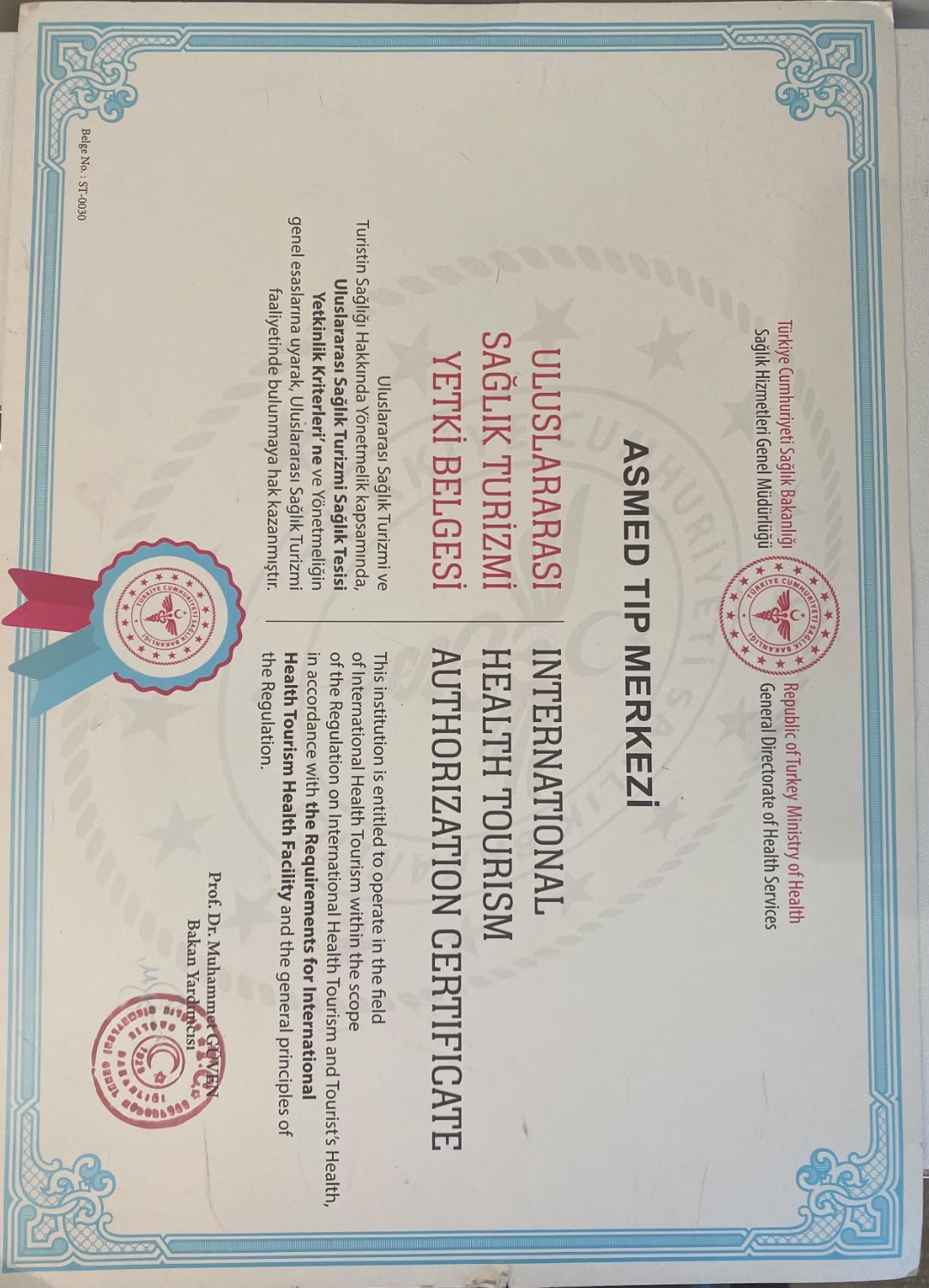
Établissement de santé agréé pour le tourisme médical international
ASMED Medical Center est un établissement de santé agréé par le ministère de la Santé de la République de Türkiye pour proposer des services dans le domaine du tourisme médical international.
Propriétaire et exploitant : ASMED ÖZEL SAÇ EKİMİ SAĞLIK HİZMETLERİ A.Ş.
Certificat d'agrément n° : ST-0030

Atatürk Mah. Sedef Caddesi No: 1/1 Ataşehir - İstanbul
Cookie Declaration - Update Date: 12.10.2026 - Editor: Ozer Erik - Tel: +90 216 464 11 11