
Smoking and Hair Loss: Does Smoking Cause Hair Loss?
Many people are aware that smoking increases your risk of developing lung cancer and respiratory illnesses. However, the negative health effects of smoking are not limited to your lungs. These chemicals can travel from your lungs to your bloodstream when you breathe them in. They can spread to other parts of your body through your blood and have a negative impact on many aspects of your health.Another under-acknowledged effect is the actual physiological effect that smoking has on hair. This paper will focus on hair loss caused by smoking and explore ways through which one can address this issue.
Does Smoking Cause Hair Loss? The Short Answer
One of the less well-known side effects of smoking is an increased risk of hair loss. It is unclear why smoking is associated with hair loss, but many factors are thought to be involved. Tobacco use has the potential to harm your hair follicles and increase your risk of developing hair loss.
The researchers discovered that 425 of 500 smokers had some degree of hair loss, whereas only 200 of 500 nonsmokers had signs of hair loss. Smoking can also cause oxidative stress and decreased blood flow to your hair follicles, which can lead to hair loss.
Hair loss occurs as a result of a number of biological mechanisms associated with smoking that work in conjunction rather than on their own. The more one smokes and for a longer period of time, the stronger those effects would manifest. It is helpful to discuss each pathway independently, which allows explaining how smoking and thinning hair are connected and why this connection was found in all the studies conducted.
How Smoking Damages Hair Follicles at the Cellular Level
In order to grasp the mechanism behind the thinning hair resulting from smoking, one needs to first understand the function of the hair follicles. In essence, a hair follicle is an intricate organ located within the scalp which facilitates the production, growth, and renewal of the hair strands. This process requires the constant inflow of oxygen and nutrients.
Tobacco contains chemicals that can harm your circulation and cardiovascular health. Smoking also causes plaque buildup in your blood vessels, which increases your risk of developing conditions such as blood clots, heart attacks, and stroke. Blood vessels nourish your hair follicles and allow nutrients to be delivered and waste to be eliminated. Impaired blood flow to your scalp may result in hair loss or damage.
There is more to consider regarding circulatory impairment. There are over 7,000 chemical compounds found in tobacco smoke, most of which are toxic to the follicle's cellular constituents. Chemical substances like nicotine, carbon monoxide, and aromatic compounds disrupt follicles' natural mechanisms that control their signaling mechanisms. Carbon monoxide takes the place of oxygen in the bloodstream, making it such that even when there is blood in the scalp, it transports less oxygen to the follicles than normal. The follicles will therefore start shrinking and producing thinning hair until they stop producing hair entirely due to hypoxia.
Oxidative Stress: How Free Radicals Triggered by Smoking Weaken Hair
Smoking causes your body to produce more free radicals. Free radicals are molecules that easily react with other molecules in your body and can potentially damage your cells' DNA. Furthermore, oxidative stress occurs when your body has an abnormally high level of free radical activity. Tobacco smoke, pollution, radiation, and ultraviolet rays are all potential sources of oxidative stress.
The condition of oxidative stress turns out to be chronic in regular smokers since it overpowers the antioxidants produced by the body in the long run. In this respect, hair follicle cells are highly susceptible since they constitute some of the most metabolically active cells in the body, growing quickly to give rise to new hairs. The fast cell growth depends on DNA, which becomes damaged through free radicals.
It is also responsible for localized inflammation in the region of the follicle, which could result in perifollicular fibrosis, which occurs when fibrous tissues form and wrap up the follicle, causing its constriction. Scarring results in irreversible reduction in the follicle's ability to produce hair. That is one of the reasons why heavy, long-term smokers are unable to recover from balding after they stop smoking. Abstinence and antioxidant supplementation are the only ways to prevent the damage but not revert it once it is done.
Smoking and Hair Thinning: The Effect on the Hair Growth Cycle
The hair growth cycle has three main phases: anagen (active growth), catagen (transition), and telogen (resting and shedding). On a healthy scalp, roughly 85–90% of follicles are in the anagen phase at any given time, which is why losing 50–100 hairs a day is considered normal.
The imbalance becomes affected by smoking. The effect of oxidative and circulatory damage on follicles due to the toxic chemicals in cigarettes makes follicles move from the anagen phase to telogen prematurely. Once too many follicles go through telogen simultaneously, the effect can be diffuse thinning of hair or hair loss, which is a pattern similar to telogen effluvium, a type of stress-induced hair loss.
The androgen hormones and growth factors that control follicular cycle are affected by nicotine. Studies have shown that smoking increases the sensitivity of DHT hormone in scalp follicles, a phenomenon that is associated with pattern baldness. Smoking does not only inhibit hair growth but also shortens its duration with each cycle, resulting in short and fine hair.
Secondhand Smoke and Hair Loss: Are Non-Smokers at Risk Too?
While most studies concerning the link between smoking and hair loss have concentrated on people who actively smoke, there are legitimate worries about the dangers of long-term passive smoking. Passive smoke has many of the same chemicals in it that active smoke does, including radicals and carbon monoxide.
It would not be outlandish to assume that continuous oxidative stress occurs for people who spend time in places that have a high concentration of tobacco smoke around. While it is still unclear whether exposure to such a smoke alone would have any effect on people with no other hair-loss risk factors, one should note that people genetically predisposed to androgenetic alopecia will only have their negative tendencies made worse by passive smoking.
In essence, avoiding secondhand smoke seems like a rational approach for a number of reasons, among which hair loss prevention should be considered.
Is It Possible To Reverse Hair Loss Caused By Smoking?
When you stop smoking, you can undo some of the damage that smoking has done to your body. For example, if you don't smoke for 15 or 16 years, your risk of having a heart attack or stroke is the same as if you never smoked. It's unclear whether smoking-related hair loss can be reversed. If the thinning hair is caused by a medical condition, some people can achieve noticeable hair regrowth. You're unlikely to see significant regrowth if you have male-pattern or female-pattern hair loss. You may find that using Rogaine (minoxidil) helps you achieve some regrowth.
Through Asmed, you can learn more about smoking after hair transplantation, hair transplantation in Turkey and more.
When to See a Doctor About Smoking-Related Hair Loss
Hair loss experienced by people who smoke is not necessarily due only to tobacco products. There are other risk factors that accompany smoking and act as independent triggers for hair loss, such as nutritional deficiencies, stress, thyroid problems, and genetics. It is important to be aware when it is necessary to consult with specialists.
It may be recommended to see a dermatologist or trichologist if hair loss occurs abruptly or in patches, or hair loss becomes very rapid within a short period of time, or if the scalp becomes itchy, tender, or changes in texture, or if hair loss persists for longer than three to six months since quitting smoking. It will be possible for a specialist to distinguish telogen effluvium caused by smoking, androgenic alopecia, and alopecia areata from other diseases on the basis of an examination and additional tests when needed.
For those whose hair loss has progressed to the point where treatments like minoxidil or finasteride offer insufficient regrowth, hair restoration surgery may be worth exploring. Understanding hair transplant cost and candidacy criteria is a sensible starting point for anyone considering that route, and quitting smoking well before any procedure is typically a prerequisite that clinics will require.
FAQs About Smoking and Hair Loss
How many cigarettes a day does it take to cause noticeable hair loss?
There is no universally accepted level, nor has research shown a precise number of cigarettes smoked daily that will consistently cause hair loss in everyone. What research has shown is a dose-response effect, meaning that heavy smokers or those who smoke longer experience more hair loss compared to light smokers or non-smokers. Smoking even moderately will create oxidative stress and poor scalp blood circulation. It means that risk should be thought of as cumulative rather than having a cutoff number of cigarettes smoked daily.
Can smoking make androgenetic (male or female pattern) hair loss worse?
Yes, and this is one of the most clinically relevant aspects of the connection between smoking and hair loss. Androgenetic alopecia results from follicular sensitivity to DHT in individuals who have the genetic disposition for this problem. By increasing the effects of androgen activity, deteriorating the microcirculation in which follicles rely, and intensifying the oxidation process which causes the shrinkage of the follicles, smoking exacerbates this problem. In other words, an individual who has the genetic susceptibility to develop pattern hair loss and smokes will do so sooner and to a greater extent.
Does vaping or using e-cigarettes also cause hair loss?
The process of vaping does not include any of the substances that are released during the burning process and that are present in cigarettes; however, it can also be harmful for your hair. First of all, it produces nicotine that narrows the blood vessels and affects blood flow in the scalp area, and it also produces oxidative stress substances, but in smaller amounts than the tobacco smoke. There is no sufficient scientific research that would explore the effects of vaping on hair loss, but based on the mechanism through which smoking leads to thinning hair, we can assume the same thing about vaping.
How long after quitting smoking can you expect to see improvements in hair health?
Circulatory improvements begin relatively quickly after quitting, blood flow and oxygen delivery to peripheral tissues, including the scalp, start recovering within weeks. Visible improvements in hair density take longer, since the hair growth cycle itself runs on a months-long timescale. Most people who experience smoking-related shedding or diffuse thinning can expect to see a reduction in shedding and some recovery in hair quality within three to six months of quitting, with more meaningful density improvements potentially taking up to a year or more. How much recovery occurs depends heavily on how long and how heavily a person smoked, and on whether other contributing factors are also addressed.
Is hair loss from smoking permanent, or can it fully grow back?
The answer depends on how much follicle damage has already occurred. Hair loss driven mainly by impaired circulation and oxidative stress, without significant perifollicular fibrosis, has a reasonable chance of partial or full recovery after quitting, particularly in younger people who haven't been heavy smokers for many years. Where smoking has accelerated androgenetic alopecia in genetically susceptible individuals, regrowth is less likely, because follicle miniaturisation isn't simply reversed by restoring blood flow. In those cases, medical treatments or, for suitable candidates, hair restoration procedures may be necessary to achieve meaningful cosmetic improvement.
Asmed is one of the leading hair transplantation clinics in Istanbul, Turkey. You can get the best possible service and information from our hair transplant professionals, and get your operation done with the best tools and prices possible. Contact us through our website, learn more about FUE technique and our methods.
Book hair transplant free consultation with our expert medical team to learn more about hair transplant procedures and hair transplantation costs.
Obtenez une consultation gratuite!
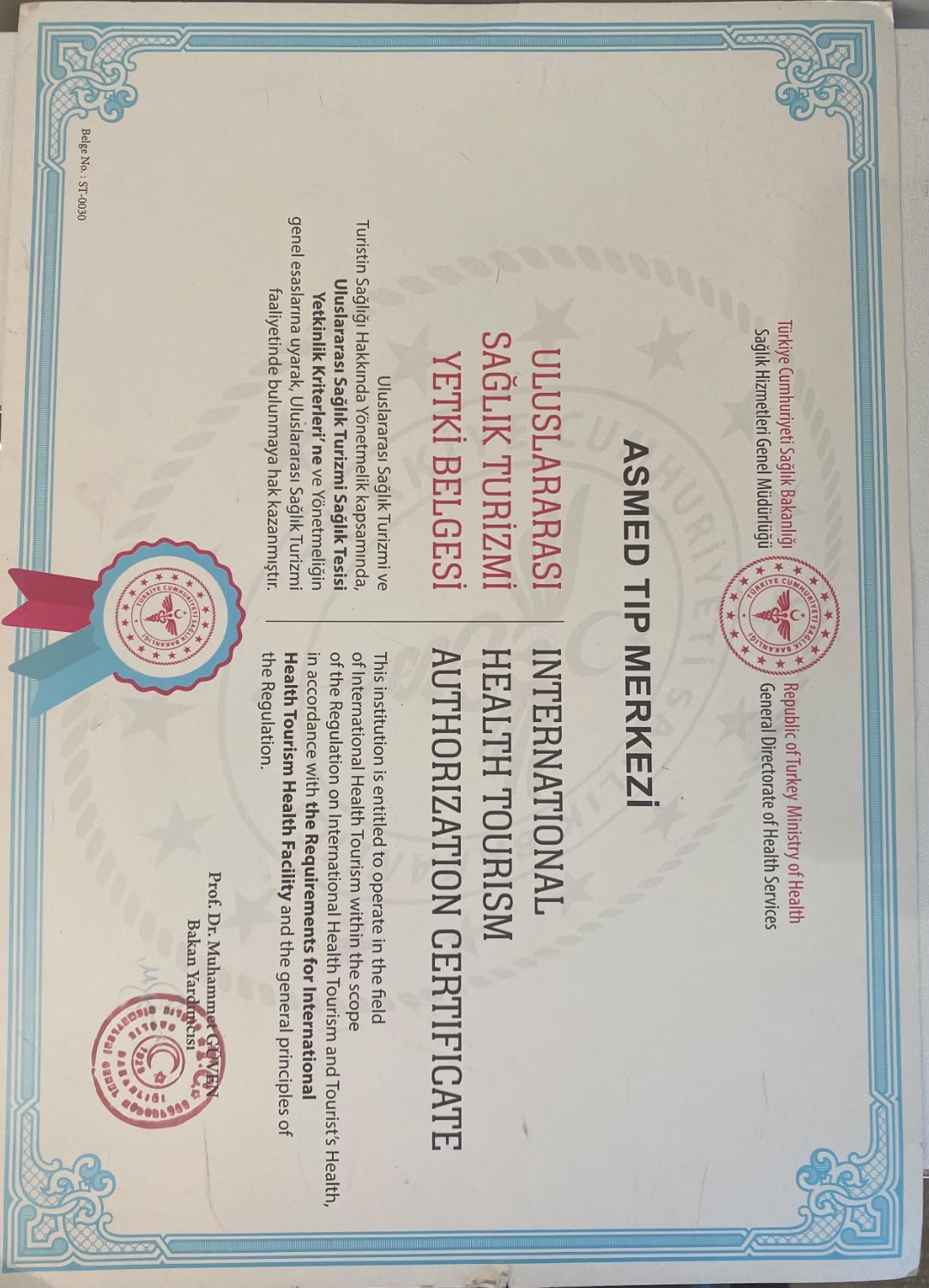
Établissement de santé agréé pour le tourisme médical international
ASMED Medical Center est un établissement de santé agréé par le ministère de la Santé de la République de Türkiye pour proposer des services dans le domaine du tourisme médical international.
Propriétaire et exploitant : ASMED ÖZEL SAÇ EKİMİ SAĞLIK HİZMETLERİ A.Ş.
Certificat d'agrément n° : ST-0030

Atatürk Mah. Sedef Caddesi No: 1/1 Ataşehir - İstanbul
Cookie Declaration - Update Date: 09.09.2026 - Editor: Ozer Erik - Tel: +90 216 464 11 11