
Is Hair Loss Hereditary? Causes and Prevention
When it comes to hair loss, people have a lot of questions, especially about hereditary hair loss. Many people are concerned that they will lose their hair because other members of their family are bald or have thinning hair. Thankfully, there are several permanent solutions for genetic hair loss, such as FUE hair transplant. So, you do not need to stress extremely about losing your hair and keep yourself under pressure all the time. Here is what you need to know about hereditary hair loss:
What Does Hereditary Hair Loss Mean?
Hereditary hair loss, put simply, is hair thinning or baldness that runs in families, passed down through the genes. The medical name for it is androgenetic alopecia, the most common form of hair loss in the world, affecting both men and women, though in different ways. In its etymology alone, we find the root cause of the disease, “andro” is an indication of the involvement of the male hormones known as androgens, and “genetic” is telling us about the fact that it is hereditary in nature.
In genetically predisposed individuals to baldness, the hair follicles on the scalp are responsive to dihydrotestosterone (DHT), which is a hormone produced by the body out of testosterone. Due to this responsiveness, the hair follicles begin to shrink, and hair is produced only in a fine, short form.
Is Hair Loss Always Hereditary? Understanding the Genetic Link
Hereditary hair loss, commonly known as pattern baldness or androgenetic alopecia, is one of the most prevalent causes of hair loss in men specifically. It is a hereditary disorder that changes the hair development cycle, reducing the period of time the hair is actively growing.
Hair loss may not necessarily be genetic in all cases. For instance, deficiencies in nutrition, hormonal imbalance, thyroid problems, stress, some types of medications, and autoimmune diseases such as alopecia are at times causes for hair loss. These can normally lead to regrowth of hair once the cause of the problem is sorted out. This is, however, not the case with hereditary hair loss, which will normally worsen without intervention.
Does Hereditary Hair Loss Come from Your Mother or Father?
An issue which arises repeatedly revolves around the source of genetic hair loss, i.e. whether it is due to maternal or paternal heritage. The truth is that it is from both sides. While there was once the belief that the gene responsible for balding resided on the X chromosome, which males inherit from their mothers, modern science has debunked this notion long ago. When it comes to practical implications, having relatives on both sides, be it a father, mother, grandfather, uncle, or aunt, that have experienced thinning or balding means that your risk is considerably elevated. The more of your relatives are affected, and the younger they were when experiencing such a problem, the more likely it is that you will too. Genetic testing might help at times, but seeing a professional for an evaluation is always the best choice to begin with.
Hereditary Hair Loss in Men
In men, hereditary hair loss tends to follow a predictable path, which is precisely why it's commonly called male pattern baldness. It typically starts with the hairline pulling back at the temples, then thinning develops at the crown. Given enough time, the two areas meet, leaving the characteristic horseshoe fringe of hair around the sides and back of the scalp.
There are seven different stages of male pattern baldness defined by the Norwood Scale; they can range from the mild stage 1 of hair thinning to nearly complete loss of hair in stage 7. It is significant for the doctors to figure out which stage the patient is at on the Norwood Scale as it will help to define which kind of treatment could be appropriate and if transplantation could be used. Hair loss can start in late teenage years or in early twenties for those who have genetic predisposition to this condition.
Hereditary Hair Loss in Women
Hair loss caused by genetics is something that doesn't get as much attention as it should. It does exist, however, and in women, the problem manifests itself quite differently than in men. Instead of the receding hairline and patches of baldness, the woman suffers from a more general thinning on the scalp, especially at the top and crown, although her front hairline remains intact. Clinicians use the Ludwig Scale, with three stages, to assess and grade this type of loss.
Women's hair loss can also be driven by hormonal shifts, pregnancy, menopause, polycystic ovary syndrome, so a thorough evaluation is especially important before concluding that genetics is the sole cause. A family history of thinning, however, is a strong signal. Women dealing with hereditary hair loss are far from alone in this, and real options exist: topical medications, and in appropriate candidates, surgical treatment as well.
Can Hereditary Hair Loss Be Cured?
The short answer to whether hereditary hair loss can be cured is: not in the strict sense of erasing the genetic predisposition. The condition is written into your DNA, and no current treatment rewrites that. But "cured" may not be the right target anyway. What modern treatment can do is manage the condition effectively, slow its course considerably, and in many cases restore a noticeably fuller appearance, along with the confidence that tends to come with it.
Hereditary hair loss is an actual problem that is coded in genes. However, it does not mean every person who has bald people in their family will lose their hair. There is no scientific cure to prevent hereditary hair loss from happening since it is coded in your DNA. However, there are certain possible tips you could benefit from to slow down the cycle or regain your hair.
Hereditary Hair Loss Treatment Options: From Medication to Surgery
Several treatments have solid clinical backing. The two most thoroughly studied medications are minoxidil and finasteride. Minoxidil, a topical solution or foam applied to the scalp, works by extending the growth phase of the hair follicle and is approved for both men and women. Finasteride is an oral medication that lowers DHT levels, prescribed primarily for men. Both require consistent, ongoing use; stop taking either one and hair loss typically resumes.
If you wish to regain your hair, however, you could choose medical alternatives, such as medications. For some people medication could help but if you want a permanent solution for your hair loss, you could consider a hair transplant surgery. Hair transplant operations are commonly preferred and successful procedures. You could check Turkey hair transplant results for yourself and see how effective the procedure is. Of course before jumping into a surgical procedure, you might learn more about hair transplant stages, hair transplant donor area recovery, and whether you are an eligible candidate for a hair transplant operation.
Besides medication, low level laser therapy (LLLT) is another way of stimulating the follicles, which is becoming increasingly popular nowadays. Platelet rich plasma (PRP) injection is a procedure, during which the growth factors from the patient are introduced into his scalp; this type of procedure is also constantly developing. These two techniques are not able to compete with traditional medication and surgical procedures in terms of efficiency, but can serve as a complementary technique.
How to Prevent or Slow Down Hereditary Hair Loss
Following a nutritious and well-balanced diet, for instance, may help maintain your hair's health. Hair care is also very essential for hair growth since keeping your scalp healthy might assist to avoid hair thinning.
However, beyond diet and nutrition, some routine practices might prove effective in slowing down the speed of hair loss that occurs due to hereditary causes. Hairstyles, which tend to pull the hair tight from the roots, should be avoided, along with any aggressive chemical treatment. It might also be beneficial to manage one’s stress levels through exercises or meditation, thus promoting scalp health. Even though this will not prevent the hair loss process from occurring, it can still help keep one’s hair in good condition.
Timing, however, plays an important role in the matter under discussion as well. Since hair loss caused by genetic factors occurs gradually, it would be wise to start with treatments immediately upon spotting the slightest signs of the issue. Visiting a specialist would allow building a treatment program taking into account both medical solutions and lifestyle adjustments depending on one’s unique case.
Is Hair Transplant the Right Solution for Hereditary Hair Loss?
When hair loss has progressed to a point where medications can't do enough on their own, a hair transplant offers the most permanent and consequential solution available. Modern FUE (Follicular Unit Extraction) takes healthy follicles from areas of the scalp that are naturally resistant to DHT and places them in thinning or bald zones. Those transplanted follicles carry their DHT resistance with them, which is why the results hold up long-term.
For patients from around the world, choosing a hair tansplant in Turkey has become a compelling option, experienced surgical teams paired with a hair transplant cost that is competitive compared to most other countries. Turkey, and clinics like Asmed specifically, have built strong reputations for natural-looking results with high density. Whether you're a suitable candidate depends on factors like the stability of your hair loss, the quality and quantity of your donor area, and your general health, all things a specialist can assess during a consultation.
FAQs About Hereditary Hair Loss
At what age does hereditary hair loss typically begin?
Hereditary hair loss can technically begin any time after puberty, but in men it most often becomes apparent during the twenties and thirties. Women tend to notice it later, with loss frequently becoming more evident around or after menopause. Early signs, heavier shedding, a part that seems to be widening, don't guarantee that rapid, severe loss will follow, but getting an evaluation sooner rather than later consistently leads to better outcomes.
Does hereditary hair loss skip a generation?
Hair loss can seem to skip a generation, but this reflects the complicated way multiple genes interact rather than any fixed biological pattern. You might carry the relevant genes without developing noticeable loss, while a sibling thins significantly; equally, hair loss can resurface in a generation that appeared unaffected. Because the genetic input comes from both sides of the family, predicting exactly who will be affected isn't possible without a careful look at the full family history.
Is hereditary hair loss the same in men and women?
The two are quite distinct in pattern, pace, and hormonal influence. Men typically see a receding hairline and crown thinning that can eventually progress to extensive baldness. Women more commonly experience diffuse thinning across the top of the scalp, while the front hairline tends to hold. The underlying driver, DHT sensitivity, is the same, but how strongly hormones influence the process and how it looks visually both differ, which is reflected in the different treatment approaches used for each.
How can I tell if my hair loss is hereditary or caused by something else?
The most reliable route is to see a dermatologist or hair loss specialist who can look at your family history, assess the pattern of loss, and run blood tests to rule out thyroid issues, nutritional deficiencies, or hormonal problems. As a general guide, hereditary hair loss follows recognizable patterns, a receding hairline or crown thinning in men, diffuse thinning on top in women, develops gradually, and occurs against a backdrop of similar loss in the family. Hair loss that comes on suddenly or in patches is more likely to have a different explanation.
Can hereditary hair loss be stopped permanently without surgery?
No non-surgical approach currently stops hereditary hair loss permanently. Medications like minoxidil and finasteride can slow or partly reverse the process, but only for as long as you keep taking them, discontinue either and progression typically picks back up. Surgery, through hair transplantation, offers the most durable outcome: follicles taken from DHT-resistant donor areas go on growing naturally after the procedure. For anyone not ready to consider surgery, sticking with a consistent medical regimen remains the most practical way to protect what you have.
If you are worried about your hair loss and desire to speak with a hair loss professional, the Asmed doctors are here at your service. At Asmed, we provide a variety of treatment options to help with various forms of hair loss, including hereditary hair loss. For more information and consultation, reach out now!
Obtenez une consultation gratuite!
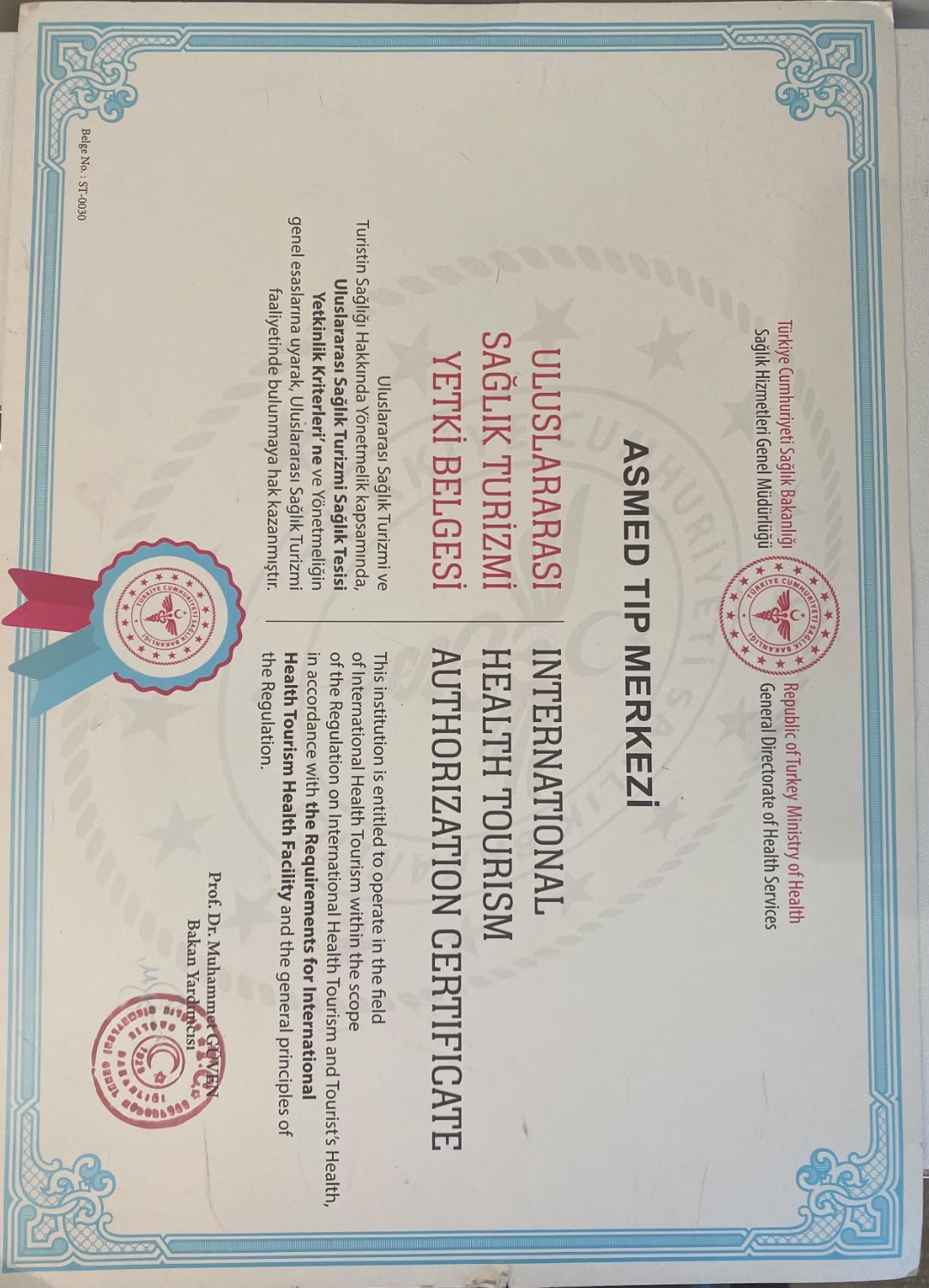
Établissement de santé agréé pour le tourisme médical international
ASMED Medical Center est un établissement de santé agréé par le ministère de la Santé de la République de Türkiye pour proposer des services dans le domaine du tourisme médical international.
Propriétaire et exploitant : ASMED ÖZEL SAÇ EKİMİ SAĞLIK HİZMETLERİ A.Ş.
Certificat d'agrément n° : ST-0030

Atatürk Mah. Sedef Caddesi No: 1/1 Ataşehir - İstanbul
Cookie Declaration - Update Date: 12.10.2026 - Editor: Ozer Erik - Tel: +90 216 464 11 11